H2Osolutions FL I Plumbing Services | Best Miami Plumber
 (786) 627-94-72
H2Osolutions FL I Plumbing Services | Best Miami Plumber
(786) 627-94-72
 19.03.2026
 6 min.
 Share
Share


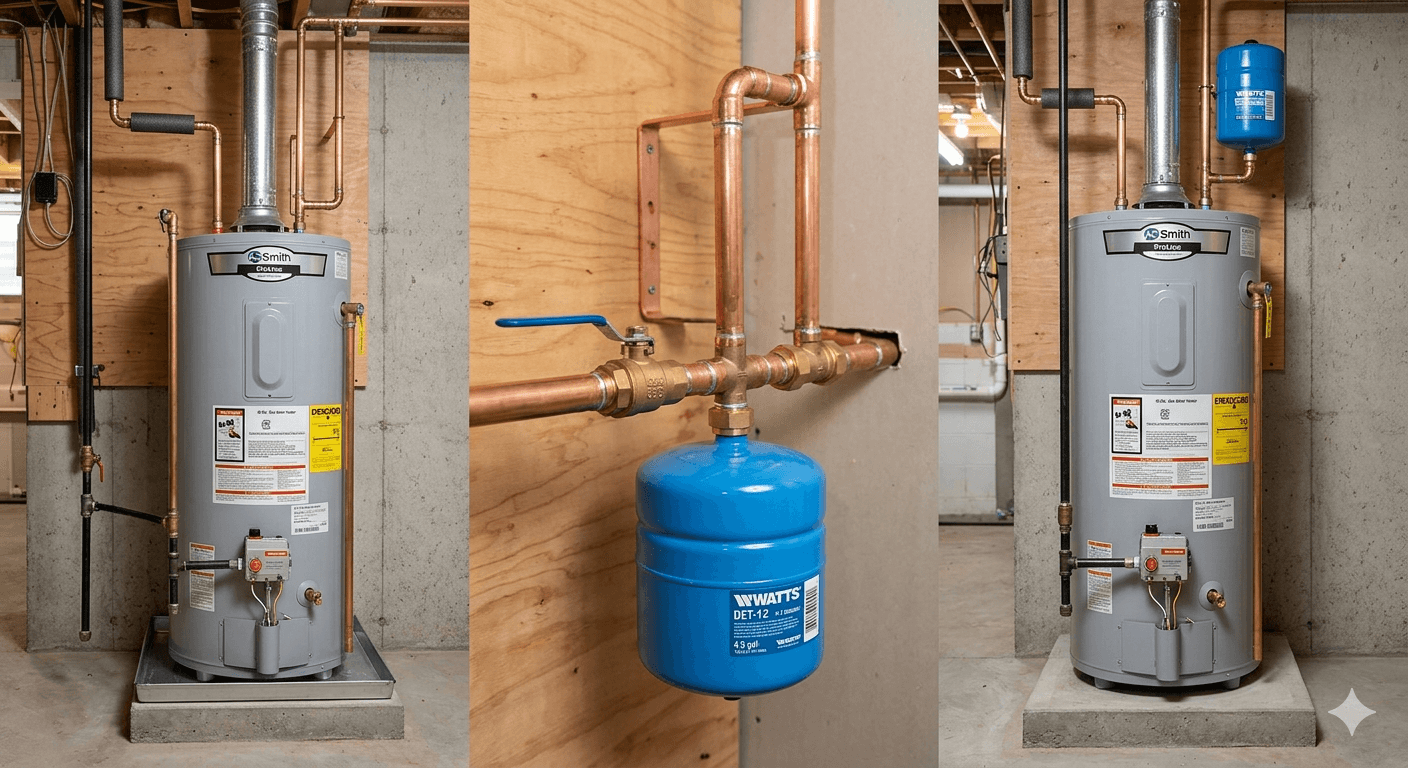
From a systems design perspective, a water heater is more than a simple appliance; it is a pressurized vessel that must integrate seamlessly with your home's hydraulic and electrical (or gas) infrastructure. In 2024, the total expenditure for a 40-gallon unit replacement generally falls between $400 [2] and $2,300 [3].
For homeowners seeking a professional "turnkey" solution—where a licensed contractor manages the permit, the unit procurement, labor, and the disposal of the decommissioned tank—the expected investment sits between $1,200 and $1,800 [3]. These figures are not arbitrary; they are dictated by your specific "fuel-to-water" delivery system and the mandates of the Florida Building Code (FBC).
| System Type | Unit Cost (MSRP) | Labor & Permits | Total Installed (Avg) |
|---|---|---|---|
| Electric (Standard) | $450 - $900 | $600 - $900 | $1,050 - $1,800 |
| Gas (Atmospheric) | $600 - $1,100 | $800 - $1,200 | $1,400 - $2,300 |
| Hybrid (Heat Pump) | $1,500 - $2,800 | $1,000 - $1,500 | $2,500 - $4,300 |
*Note: lower-end estimates typically represent a "simple swap" where existing lines and venting meet current 2024 codes.*
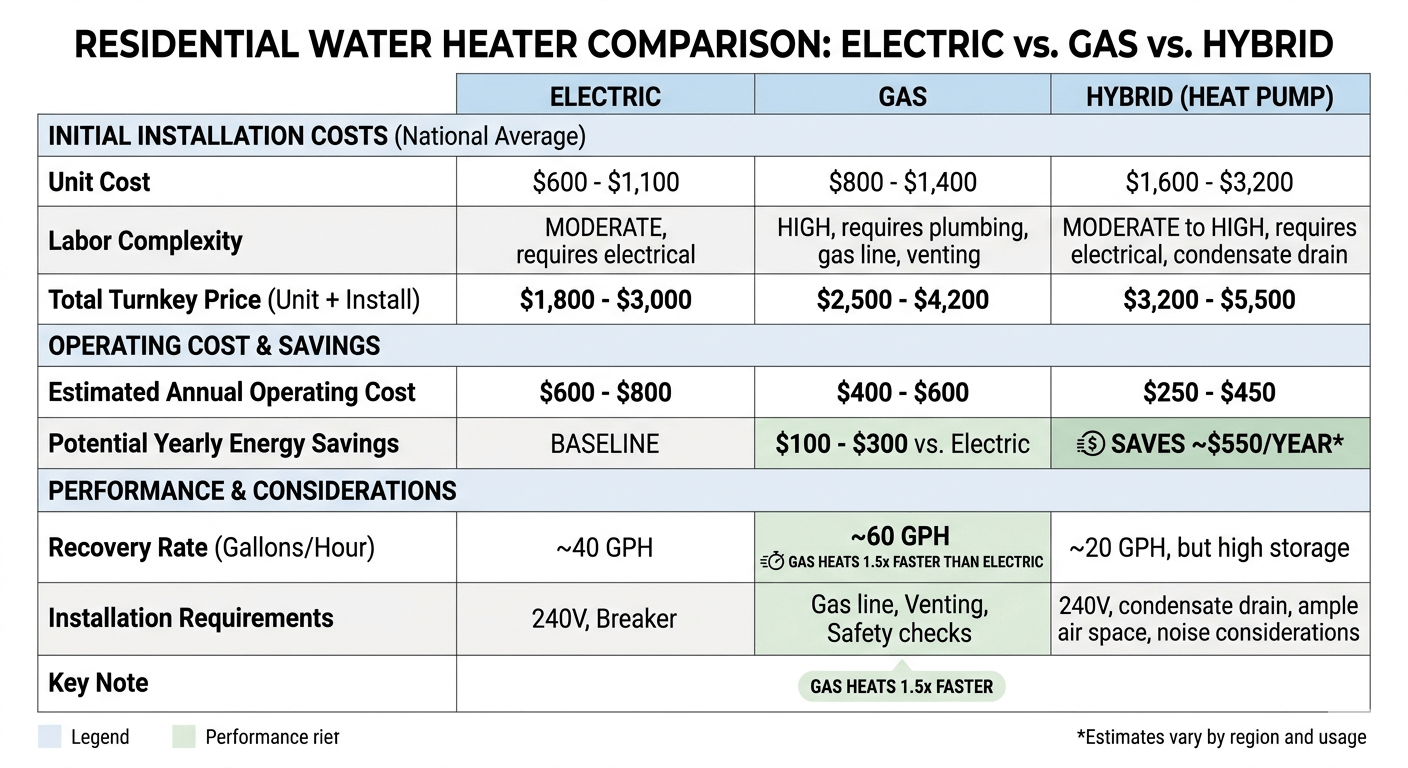
Comparing the three primary 40-gallon configurations for South Florida homes.
Electric heaters are the standard for many South Florida condominiums and townhomes. These units lack complex venting systems, which simplifies installation. However, they utilize resistive heating elements—essentially large electric coils—which are less efficient during peak demand periods.
Gas units offer a superior recovery rate (the speed at which the tank returns to the target temperature after a high-demand event, such as a shower). While the initial unit cost is higher due to the necessity of gas line integrity and exhaust venting, the performance is often preferred for high-occupancy households [10].
Hybrid models represent the most advanced tier of residential water heating. They utilize a heat pump to extract thermal energy from the surrounding air—a process that is exceptionally efficient in a warm Florida garage—to heat the water. While the initial investment is significant—$2,500 to $5,000 [4], [12]—the return on investment is quantifiable. We have observed these units saving roughly $550 annually, effectively subsidizing their "premium" cost within 3 to 7 years [12].
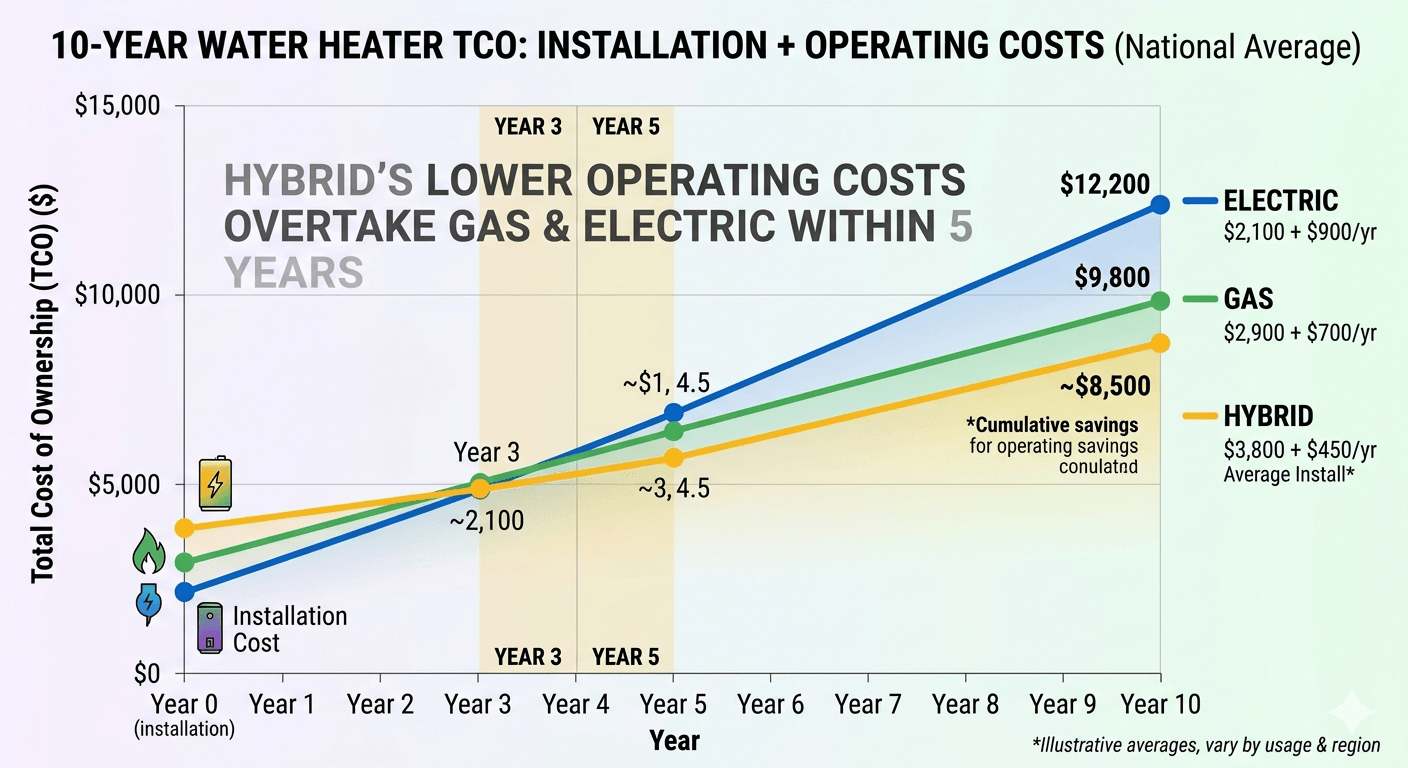
Total cost of ownership: why the "expensive" Hybrid is often the cheapest long-term choice.
As engineers, we advise clients to look beyond the immediate leak and evaluate the system's "point of no return." While a minor component failure, such as a faulty T&P valve (temperature and pressure relief valve—a safety device that prevents the tank from exploding), is a $150 fix, a compromised tank shell is a liability.
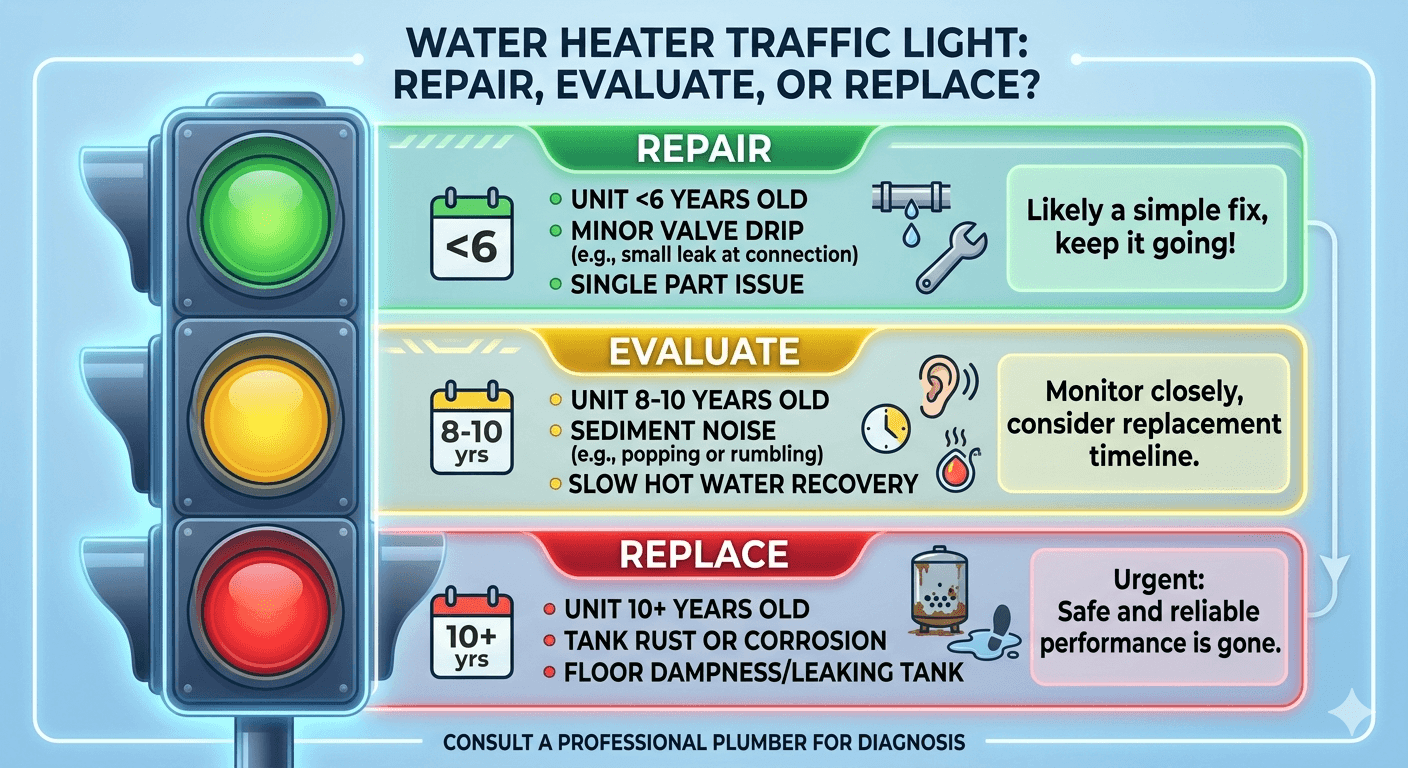
The "Stoplight" Method: when does a repair become a bad investment?
When a quote appears higher than expected, it is usually because the contractor is accounting for code compliance. In regions like Miami-Dade or Broward County, "cutting corners" is not just a safety risk; it is a violation that can void your homeowner's insurance.
The Line in the Sand:
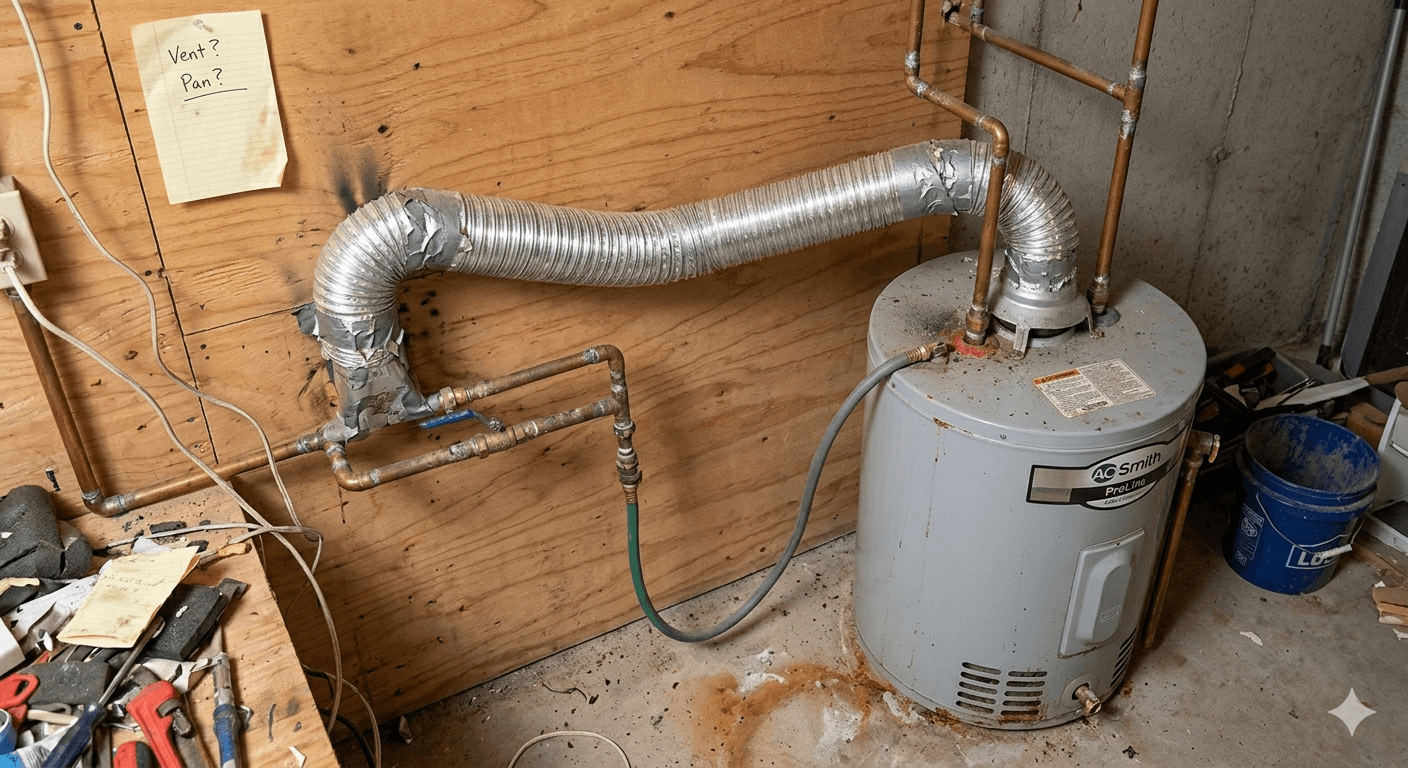
The cost of a mistake: improper venting can lead to carbon monoxide risks or moisture damage.
A 40-gallon tank is the "Goldilocks" size for a household of 1-3 people [7].
1. Audit the rating plate: take a clear photo of the label on your current heater. This provides us with the exact wattage/BTU (British Thermal Unit—a measure of heat energy) requirements and the unit's age.
2. Verify the footprint: measure the height and diameter. Modern units often have thicker insulation and may be wider than your old model.
3. Demand a full specification: don't accept a "flat price." Ensure your quote itemizes the permit, disposal, new shut-off valve, and the expansion tank.
4. Verify the license: ensure your contractor is specifically insured for the work (Gas vs. Electric) in your specific Florida county.
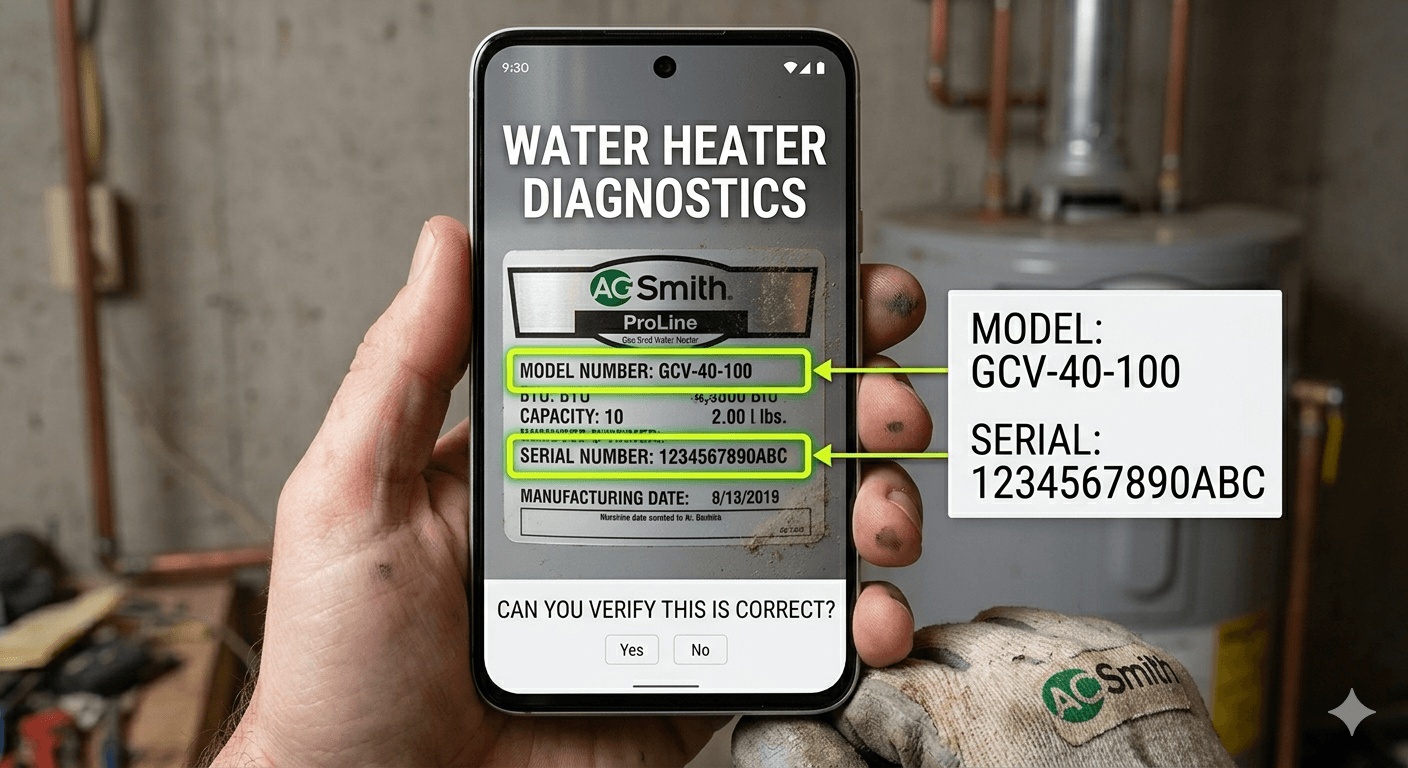
Pro tip: have this photo ready before you call for quotes to ensure an accurate estimate.
[1] Homewyse: Water Heater Installation Cost 2024 — https://www.homewyse.com
[2] Benjamin Franklin Plumbing: Market Rates 2024
[3] HomeAdvisor / Angi: 2025-2026 Price Statistics — https://www.homeadvisor.com
[4] Rheem / A.O. Smith: Technical Specs & Warranty — https://www.rheem.com
[5] HomeGuide: Permit Costs and Licensing in the US — https://homeguide.com
[6] NerdWallet: Home Maintenance Cost Analysis — https://www.nerdwallet.com
[7] Home Depot: Installation Services & Sizing Guide — https://www.homedepot.com
[8] The Furnace Outlet: State ProLine Durability Guide
[9] Just Plumbing AZ: Water Heater Recovery Time Study
[10] Atcoenergy: Gas vs Electric Comparison — https://www.atcoenergy.com
[11] Modernize: 2024 Brand Ratings — https://modernize.com
[12] Dynamic Heat & Cool: Hybrid TCO Comparison
[13] Alpine Intel / StrikeCheck: Equipment Failure Statistics
[14] US Water Heater Pros: Warranty Voidance Causes
.png) Share
Share