H2Osolutions FL I Plumbing Services | Best Miami Plumber
 (786) 627-94-72
H2Osolutions FL I Plumbing Services | Best Miami Plumber
(786) 627-94-72
 03.04.2026
 6 min.
 Share
Share


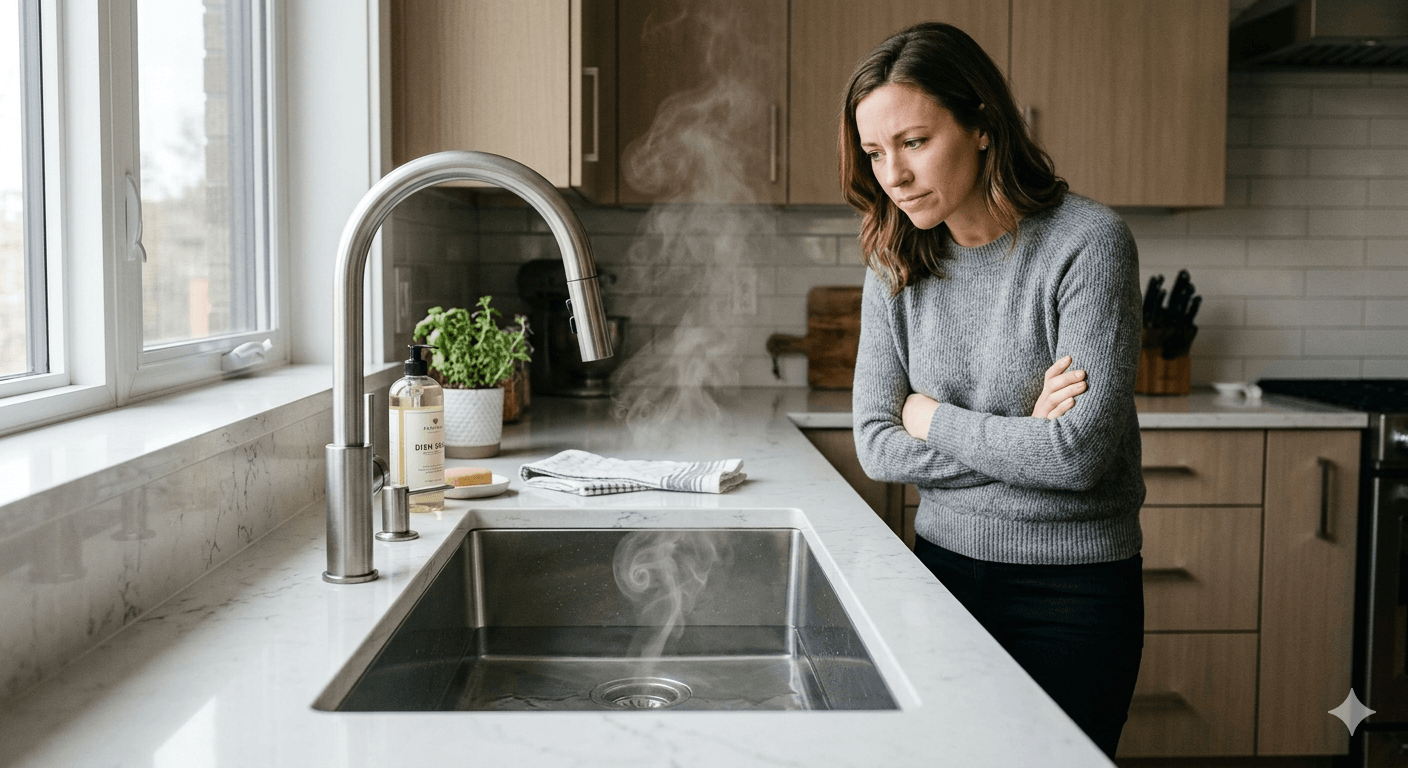
Your home's sanctuary shouldn't be compromised by system failures. Let's diagnose the "why" behind the smell.
If you are facing an active odor, use this triage logic before calling a technician:
In engineering, we don't guess; we categorize. The specific scent dictates the location of the mechanical failure.
| Odor Profile | Primary Suspect | Technical Root Cause | Risk Level |
|---|---|---|---|
| Rotten Eggs | Siphon/P-trap | hydrogen sulfide from anaerobic bacteria | moderate |
| Musty/Damp | Drain Flange | biofilm buildup from hair and surfactants | low |
| Raw Sewage | Vent Stack/Trap | dried P-trap or breached vent line | high |
The "load" you put into your pipes—specifically FOG (fats, oils, and grease) and hygroscopic foods like pasta—acts like a highway lane reduction: it slows flow, increases pressure, and eventually causes a total system standstill.
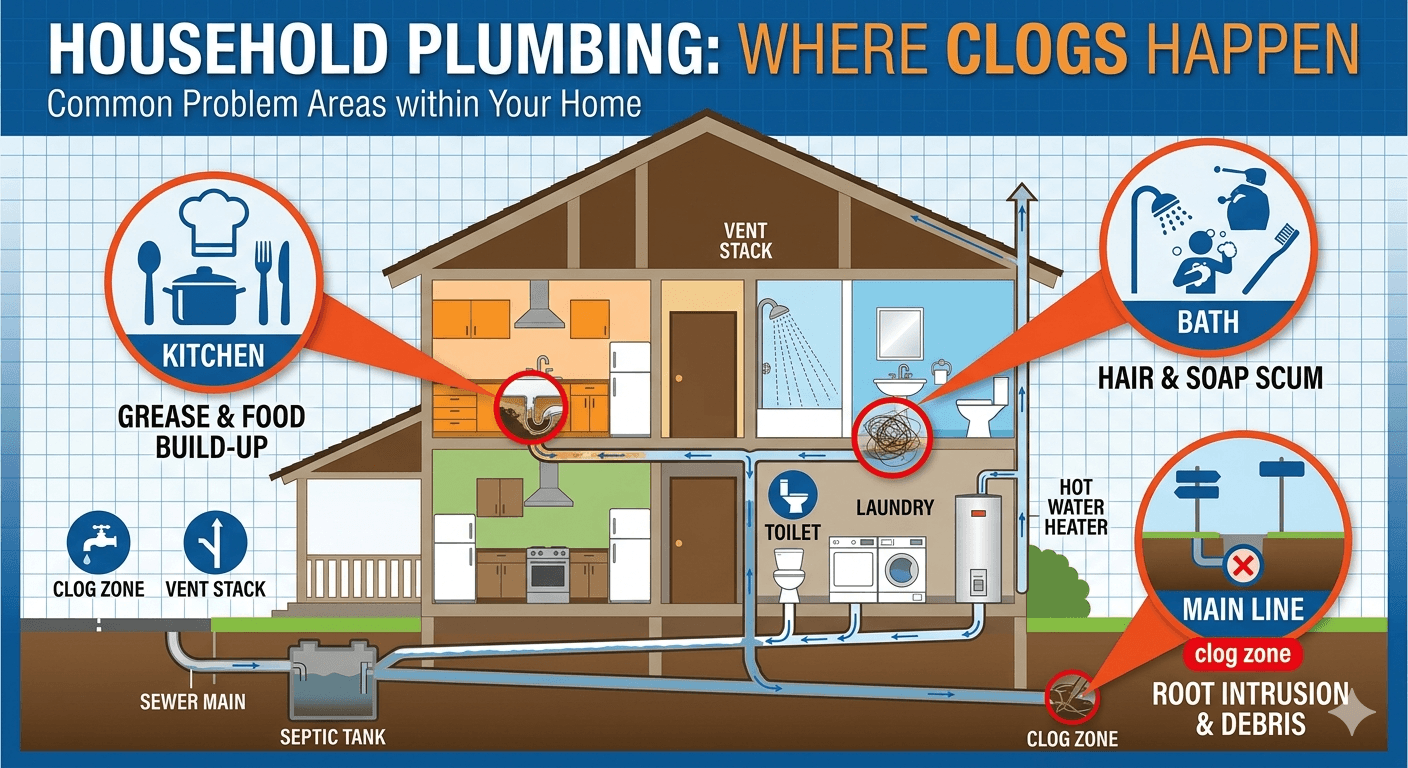
The Odor Blueprint: Mapping the most common points of failure in residential DWV systems.
Before disassembling the infrastructure, we recommend a targeted flush to address minor organic accumulation. This process utilizes a basic chemical reaction for mechanical displacement. When sodium bicarbonate (a base) meets acetic acid (an acid), it creates carbon dioxide gas. In the confined space of a pipe, this gas creates turbulence—essentially "scrubbing" the internal walls of the pipe without the use of corrosive agents that damage older South Florida infrastructure.
1. Regulated Thermal Flush: pour 1 liter of hot water down the drain. Critical specification: if your home utilizes PVC (polyvinyl chloride) piping, ensure the water does not exceed 60-65°C (140-149°F) [1]. Exceeding this thermal threshold can lead to thermoplastic softening, resulting in structural deformation or joint failure [2].
2. Sodium Bicarbonate Application: introduce 1/2 cup of baking soda. This acts as a mild abrasive and pH neutralizer.
3. Acetic Acid Reaction: pour 1/2 cup of white vinegar and immediately seal the drain to contain the pressure.
4. Dwell Time: allow 10 minutes for the pressurized CO2 reaction to work.
5. Final Rinse: flush with hot (not boiling) water to clear the emulsified debris.
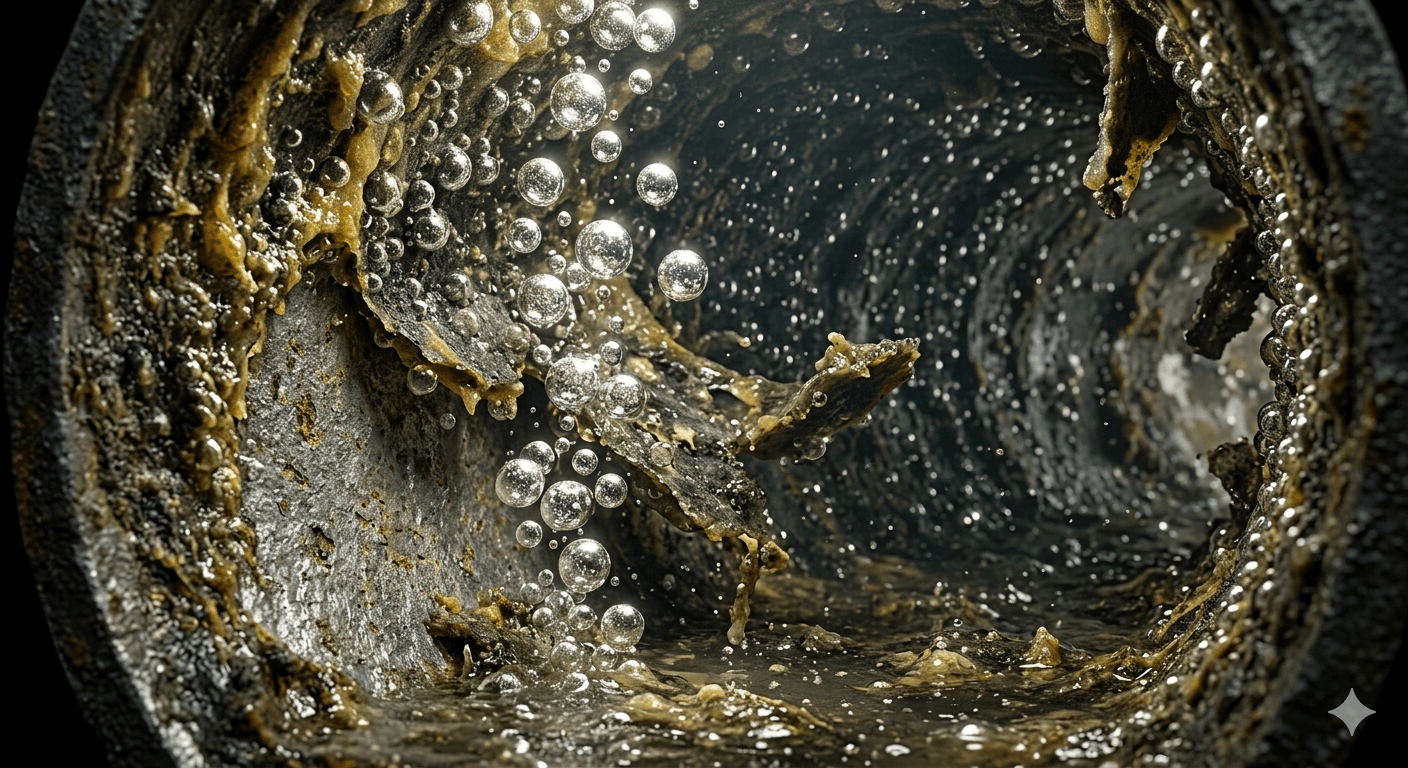
CO2 scrubbing: Using kinetic energy from a chemical reaction to restore pipe diameter.
The P-trap is a U-shaped pipe designed to hold a specific volume of water, creating a "liquid seal" that prevents sewer gases from entering your living space.
In guest bathrooms or seasonal Florida homes, this water can evaporate. Per the International Plumbing Code (IPC), a water seal must maintain a depth of 2 to 4 inches (50.8-101.6 mm) to be effective [3]. If the depth falls below 2 inches, the barrier fails, and sewer gases—including methane and hydrogen sulfide—bypass the trap [3]. Simply running the faucet for 30 seconds "primes" the trap and restores the seal.
If the smell persists after priming, organic "silt" may be trapped in the "U" bend.
1. Containment: place a catch basin under the trap.
2. Disassembly: loosen the slip nuts. If they are plastic, use hand-strength only to avoid cross-threading.
3. Extraction: remove the "U" section and clear the accumulated biofilm.
4. Inspection: verify the compression washers (gaskets) are pliable. If they are brittle, replace them to prevent slow leaks that can damage cabinetry.
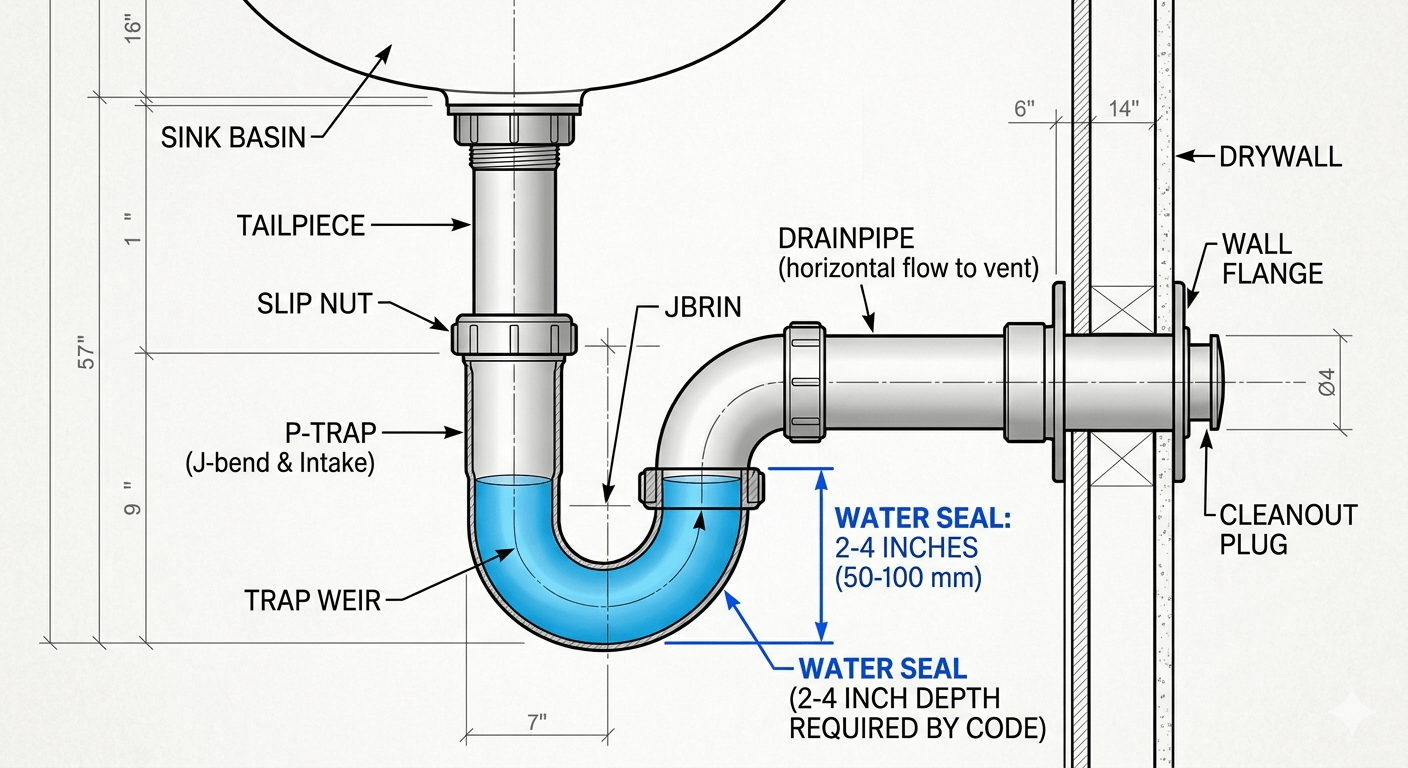
The P-trap: Your home's primary mechanical defense against sewer gas infiltration.
Most "liquid plumbers" found in big-box stores contain sodium hydroxide (30-35%) or sulfuric acid (75-90%) [4]. While effective at dissolving hair, these substances are highly exothermic—they generate heat that can warp PVC, corrode the sacrificial anodes in your water heater, or react violently with aluminum piping [4].
Our Engineering Recommendation: use enzymatic cleaners. These use living bacteria to "digest" organic blockages over time. They are safer for your pipes, safer for septic systems, and provide a long-term reduction in biofilm. We view these as a maintenance layer rather than a "emergency" fix.
If you smell sewage throughout the house or hear "gurgling" in the toilet when the sink drains, you aren't looking at a simple clog. You are looking at a vent stack blockage or a mainline failure. In South Florida, aging cast iron lines are prone to "scaling," where the interior of the pipe becomes jagged, catching every piece of debris like a coral reef.
If DIY methods fail, expect the following market rates for professional intervention in the South Florida region:
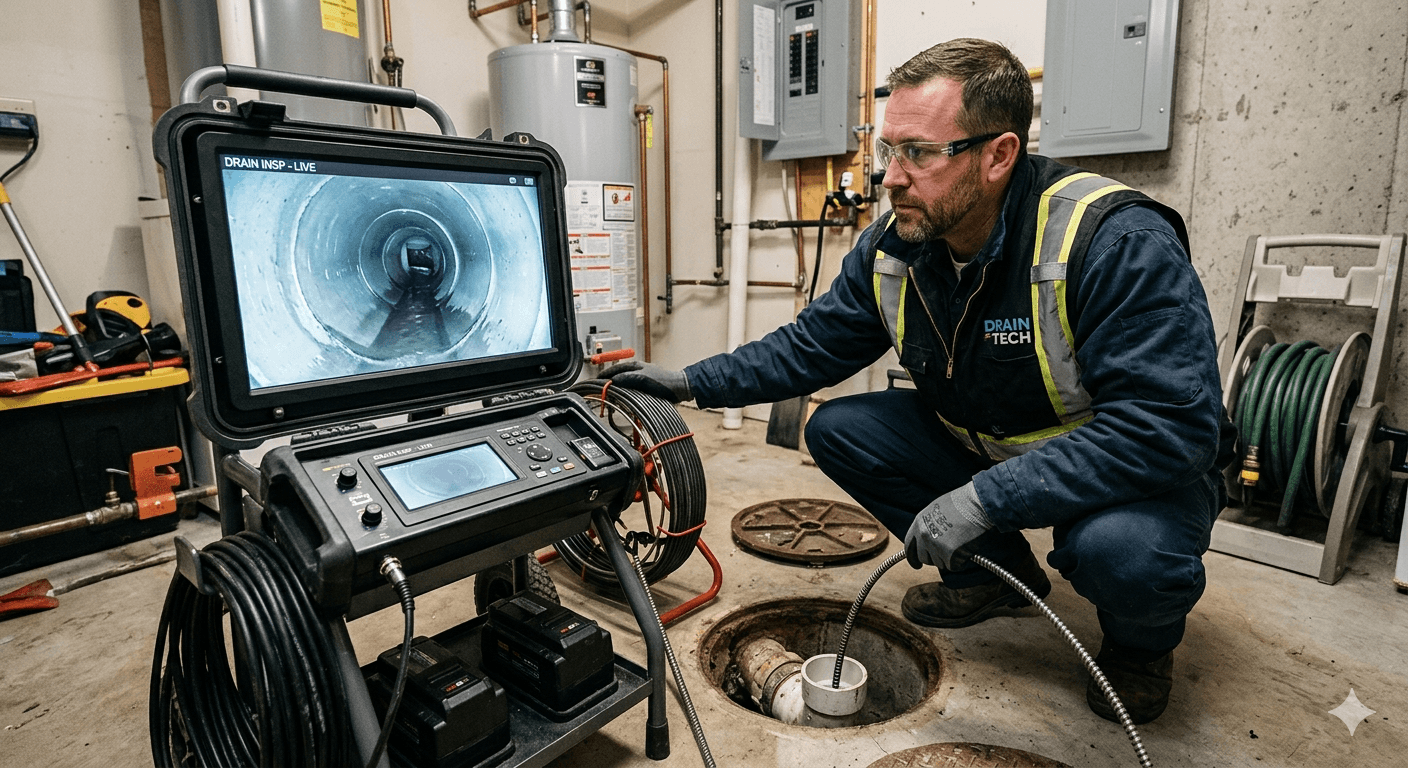
Modern diagnostics: Why we use fiber-optic cameras to find the root cause before we ever pick up a wrench.
To maintain a system that lasts 30+ years, we must control the "input" side of the equation.
Your home's plumbing is a precisely balanced hydraulic circuit, not just a series of tubes. When odors break through, they are telling you that the balance has shifted. By following these engineered protocols, you aren't just masking a smell—you are ensuring the safety and longevity of your home's most critical infrastructure. If these steps don't resolve the issue, remember: we have the fiber-optic tools to see what the naked eye cannot. Don't let a minor blockage turn into a mainline catastrophe.
[1] Multiwood - Temperature limits for polymer pipes — https://multiwood.ru/truby/pvh-truby/kakuyu-temperatury-vyderzhivayut-polipropilenovye-truby
[2] Tuoyanpx - PVC Temperature Limits & Degradation — https://ru.tuoyanpx.net/blog/what-is-the-maximum-temperature-a-pvc-tube-can-withstand-225738.html
[3] ICC Digital Codes - Chapter 10: Traps, Interceptors, and Separators — https://codes.iccsafe.org/content/IPC2021P1/chapter-10-traps-interceptors-and-separators
[4] Smotrim.ru - Chemical Expertise of Household Cleaners — https://smotrim.ru/audio/2420823
[5] Angi - Drain Cleaning Costs 2025 Guide — https://www.angi.com/articles/how-much-does-drain-cleaning-cost.htm
[6] Cooling Unlimited - 6 Common Household Items That Clog Drains — https://www.coolingunlimited.com/blog/plumbing-service/6-common-household-items-clog-drain/
.png) Share
Share