H2Osolutions FL I Plumbing Services | Best Miami Plumber
 +1 (786) 627-94-72
H2Osolutions FL I Plumbing Services | Best Miami Plumber
+1 (786) 627-94-72
 21.05.2026
 6 min.
 Share
Share


If you are currently experiencing sewage backup or water rising from your lowest floor drains, follow these steps immediately before proceeding with diagnostics:
When a main sewer line fails, it is a systemic breakdown of the property's waste management infrastructure. We view your plumbing as a calculated network of slopes, pressures, and diameters. When that network is compromised, the symptoms — gurgling and backups — are final warnings before structural damage occurs.
If our initial assessment confirms a main line issue, the system must be treated as "Out of Service."
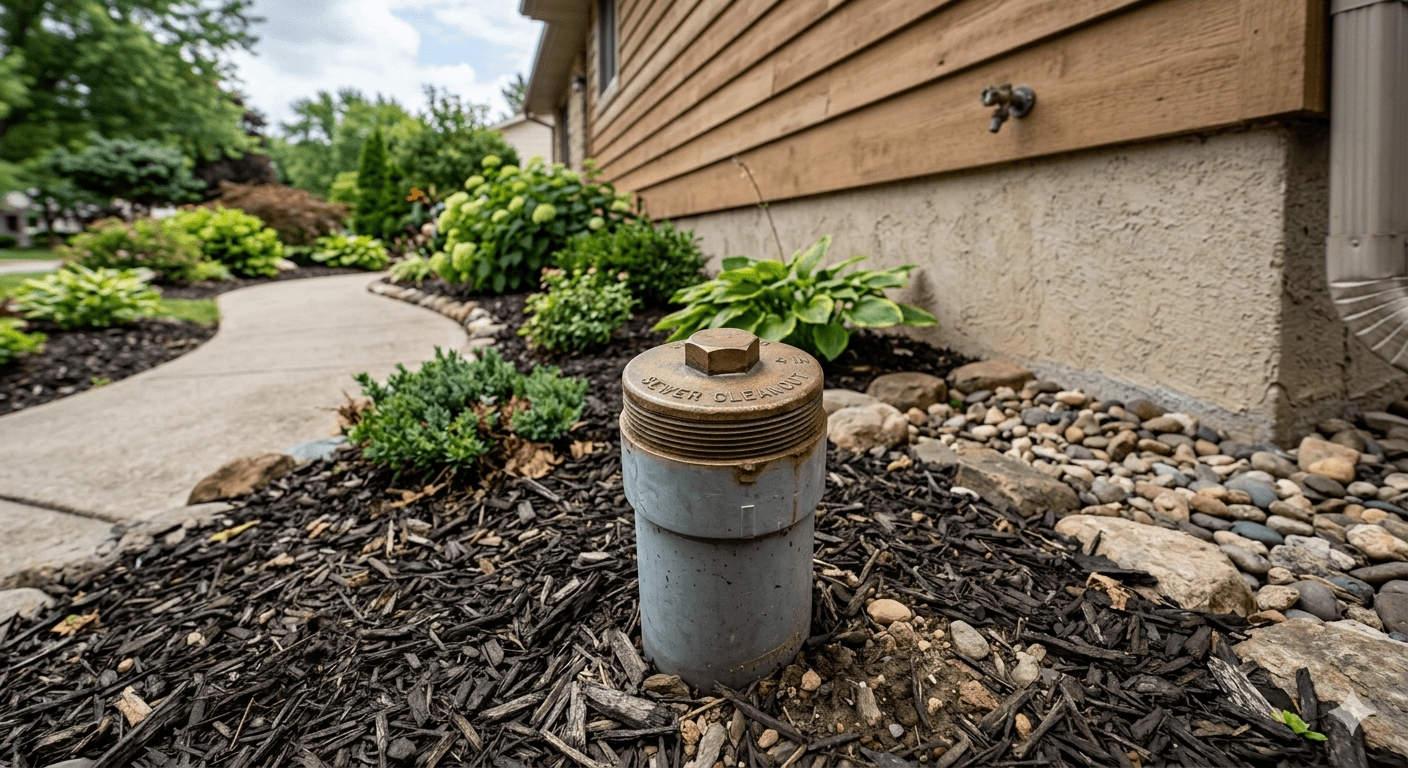
Primary Access Point: A typical exterior cleanout. Knowing this location is the difference between a minor cleanup and a full basement restoration.
To determine if you are facing a localized obstruction or a catastrophic main line failure, we perform a Hydraulic Load Test — a method of verifying if the primary artery of the home can process its designed capacity.
In any gravity-fed system, the lowest fixtures (basement showers, floor drains) show signs of failure first.
Flush a toilet while observing the water level in a nearby tub. If the displaced volume causes a rise or "percolation" (bubbling) in the tub, the main line is obstructed.
Run a sink faucet at full capacity for 2-3 minutes [1]. A functional system handles this GPM (gallons per minute) indefinitely. If water backs up into a different fixture, the blockage is downstream of the branch lines.
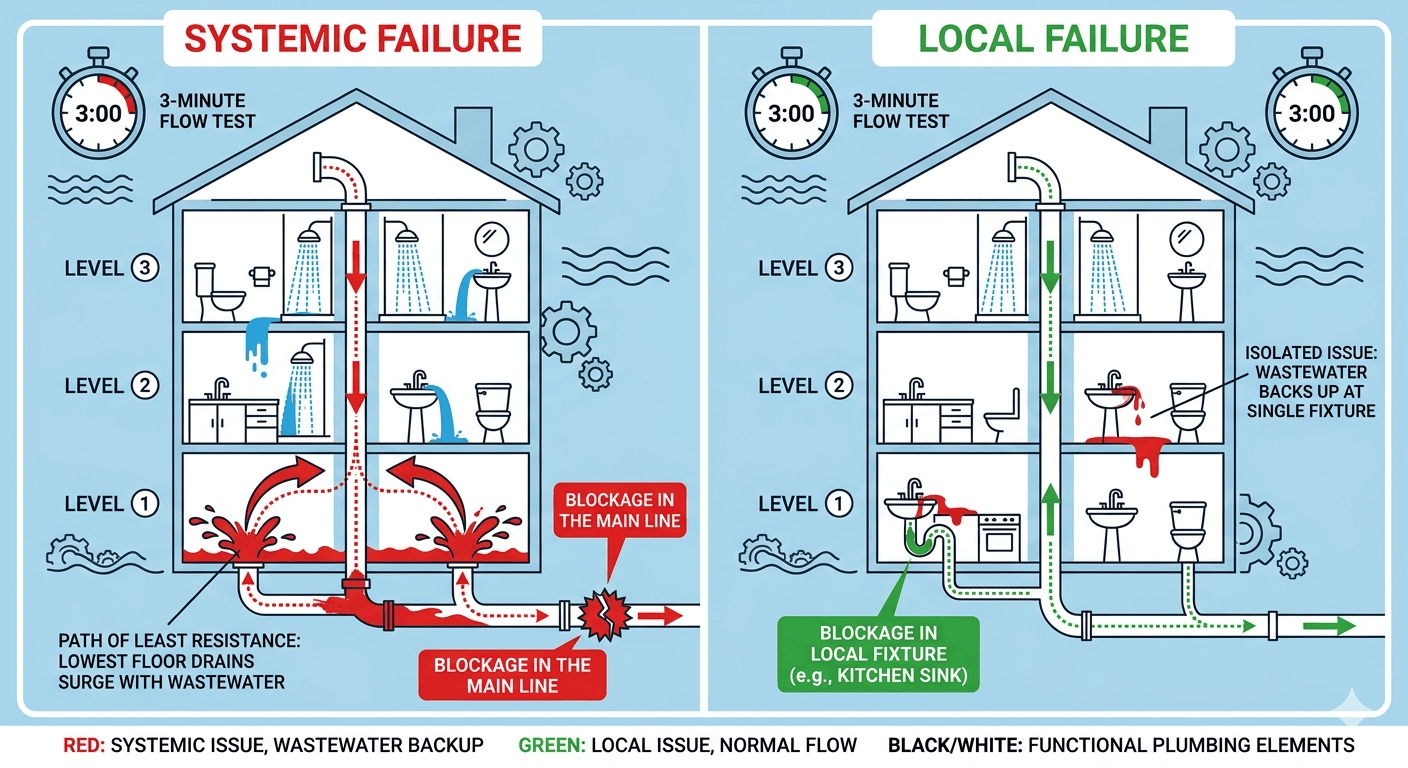
Systemic vs. Local Failure: This diagram illustrates how a blockage in the Main Line (highlighted in red) forces wastewater back through the path of least resistance—your lowest floor drains—during a 3-minute flow test.
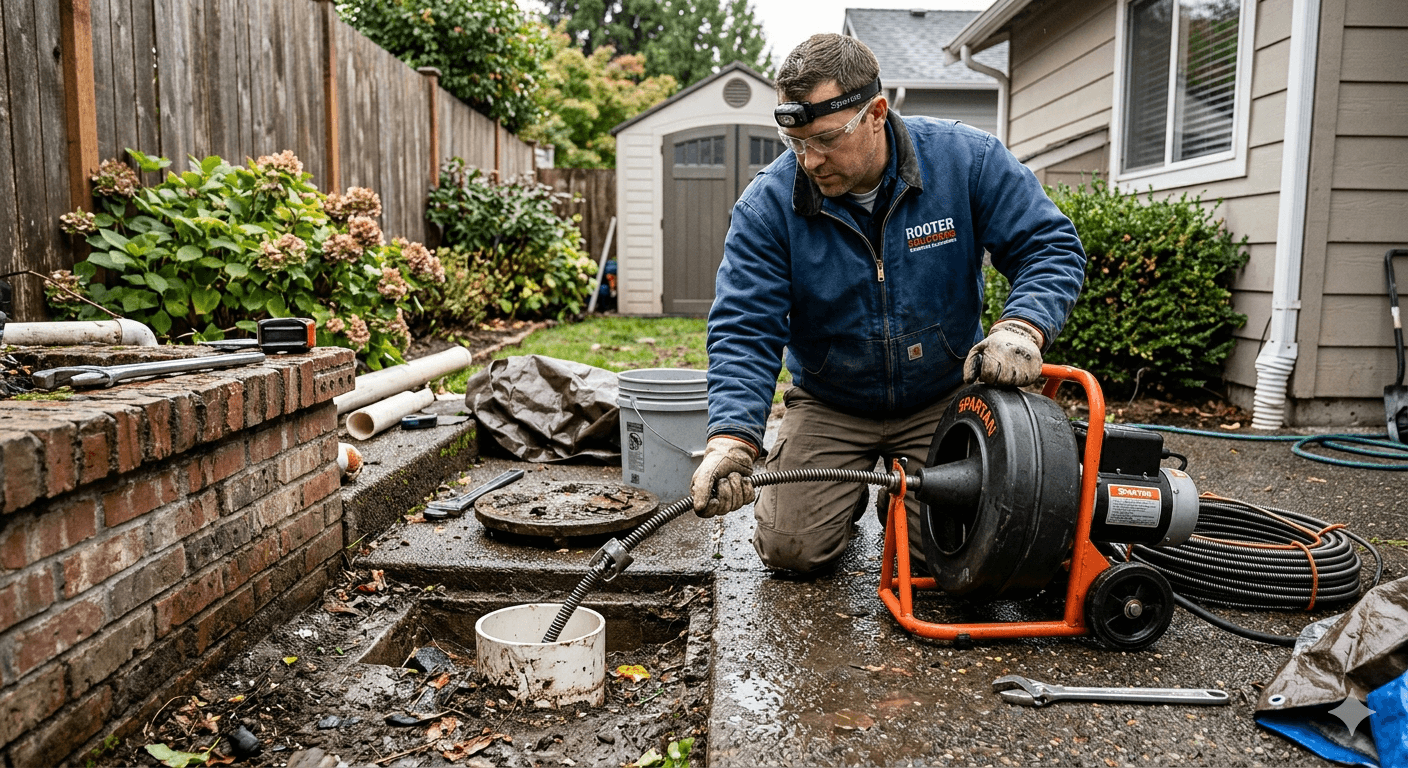
While a manual drum auger (drain snake) works for minor sink clogs, we advise caution regarding the "Point of No Return" for main lines.
Stop immediately if:
| Situation | Action | Risk of Mistake |
|---|---|---|
| Single slow sink | DIY (Plunger/Small Auger) | Low |
| Multiple fixtures backing up | Call Professional | High ($5,000+ Excavation) |
| Sewage in tub/shower | Call Professional | Extreme (Biohazard/Property Damage) |
Plumbing systems are designed for a 30- to 50-year lifecycle, but environmental factors in regions like South Florida often accelerate this timeline.
| Cause | Risk Factor (1-10) | Engineering Impact | DIY Fixable? |
|---|---|---|---|
| FOG (Fats, Oils, Grease) | 7 | Internal diameter restriction | Partially (Enzymes) |
| Tree Root Intrusion | 10 | Structural penetration and joint separation | No |
| Pipe Sag (Belly) | 9 | Loss of required 1/4" per foot slope | No |
| Flushable Wipes | 6 | Mechanical binding of existing obstructions | Yes (If caught early) |
| Corrosion/Scaling | 8 | Increased friction; snagging debris | No |
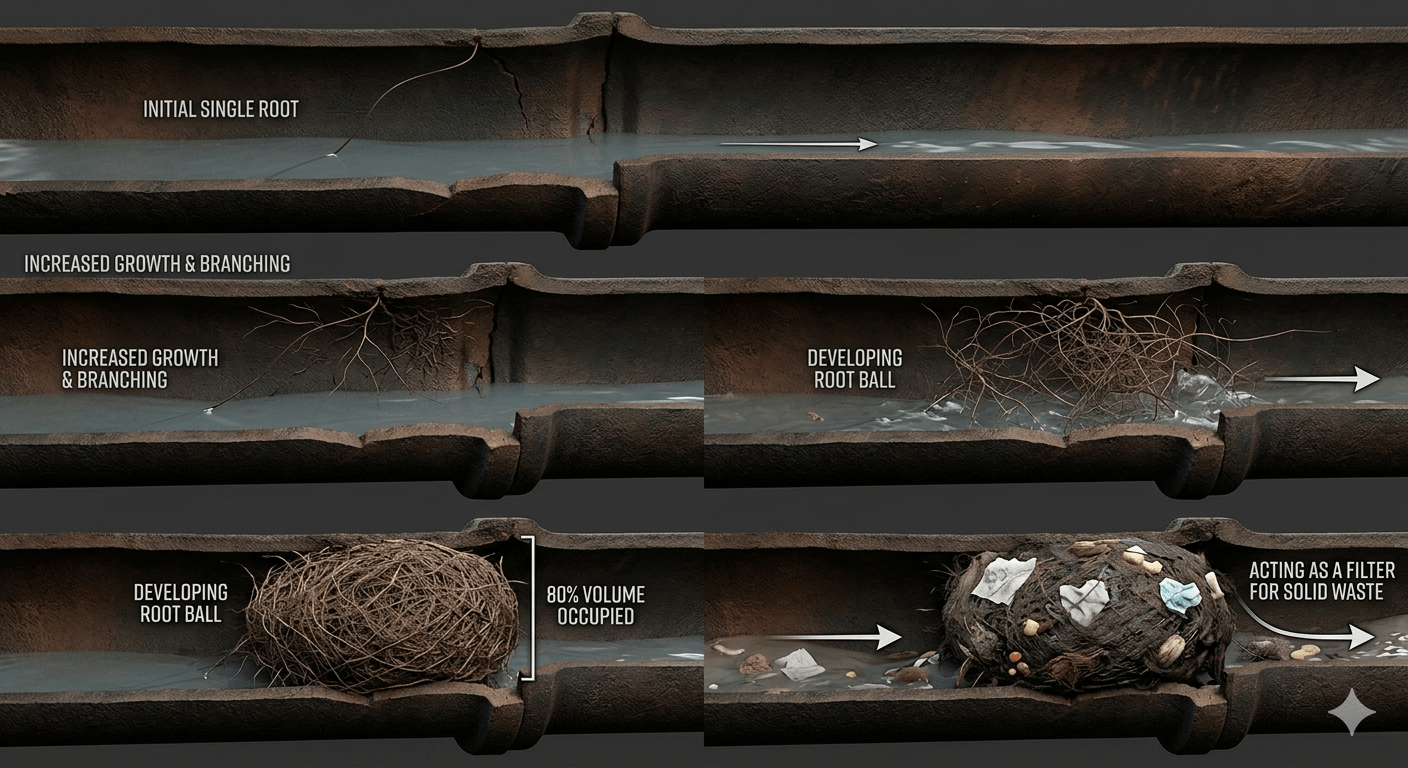
The "Root" of the Problem: A 3D render showing how a single hair-thin root can expand into a "root ball," occupying 80% of the pipe's internal volume and acting as a filter for all solid waste.
We no longer guess what happens underground. A high-definition camera provides a visual audit of the pipe's interior, essential for insurance claims. Modern industry standards utilize robotic crawler cameras for precise mapping [7].
While a snake only pokes a hole in a clog, hydro jetting uses high-pressure water (1,500 - 4,000 PSI) to restore the pipe to its original internal diameter. Note: Pressures exceeding 5,000 PSI (pounds per square inch) are hazardous to compromised older pipes [4].
For South Florida homeowners, trenchless repair is the "smart money" choice. Instead of destroying driveways, we use the existing pipe as a host.
These methods are often 30-50% more cost-effective when factoring in the restoration of landscaping [8]. Modern polymers have a verified lifespan exceeding 100 years [9].
| Service | Estimated Investment | Labor Duration |
|---|---|---|
| Video Inspection | $200 - $1,300 | 1 Hour |
| Snaking (Auger) | $100 - $250 | 1-2 Hours |
| Hydro Jetting | $350 - $600 | 2-3 Hours |
| Trenchless Repair | $60 - $250 / linear foot | 1-2 Days |
*Note: Total costs are influenced by pipe depth and municipal permits ($100-$500). Pre-cleaning via hydro-jetting is often a prerequisite for permanent repairs [5][6].*
Daniel's Final Checklist for Your Contractor:
A Final Note on Risk Mitigation
We understand the stress of a failing system. However, a sewer line is not just a pipe; it is a critical component of your home's structural health. Making an informed, engineering-based decision today prevents a catastrophic failure tomorrow. You are not just fixing a leak; you are protecting your family's sanctuary and your largest financial investment. If you follow the protocol and demand high standards from your contractors, your infrastructure will remain silent and reliable for decades to come.
[1] Water testing norms — https://barrier.ru
[2] Plumbing maintenance standards — https://stout.ru
[3] Inspection Equipment Pricing 2024 — https://discount-tools.ru
[4] Hydro Jetting Pressure Standards — https://spartantool.com
[5] Trenchless Repair Cost Factors — https://nuflow.com
[6] Permit and Preparation Costs — https://nyc.gov
[7] Global Crawler Camera Market Report 2023
[8] Economic Benefits of Trenchless Technology — https://sekisui-spr.com
[9] TEPPFA Lifespan Report: Plastic Pipes 100+ Years — https://power-e.ru
[10] Preventative Maintenance Intervals — https://cleeservices.com
[11] Sewer Backup Insurance Analysis — https://thezebra.com
[12] Septic System Chemical Sensitivity — https://eurolos.ru
.png) Share
Share