H2Osolutions FL I Plumbing Services | Best Miami Plumber
 +1 (786) 627-94-72
H2Osolutions FL I Plumbing Services | Best Miami Plumber
+1 (786) 627-94-72
 25.06.2026
 7 min.
 Share
Share


When standing water begins to pool around your ankles during a shower, you aren't just facing an inconvenience; you are witnessing a hydraulic system failure. In South Florida, where high mineral content can calcify organic debris, a minor obstruction can quickly transition into a structural risk. Most bathtub clogs are localized near the drain assembly and can be resolved in under ten minutes—if you understand the mechanics of the system before you reach for a tool.
The effectiveness of your intervention depends on a precise diagnosis: is the water stagnant (zero flow) or merely sluggish (reduced flow rate)? Stagnant water indicates a total volumetric blockage requiring mechanical extraction. Sluggish drainage suggests a circumferential buildup on the pipe walls that may respond to thermal or chemical dissolution.
Before you retrieve your toolbox, use this "traffic light" protocol to determine if the risk of property damage exceeds the potential for a DIY success:
Before you dismantle any hardware, you must determine if the failure is localized or systemic. Check the adjacent bathroom sink and toilet. If multiple fixtures are draining slowly, you have a main line obstruction that no amount of tub-snaking will fix.
However, if the issue is isolated to the tub, the "net" of hair and soap scum is likely caught on the stopper or within the siphon (the U-shaped P-trap designed to maintain a water seal against sewer gases). If you detect a foul, sulfurous odor, it indicates organic decomposition within the trap, which requires a combination of mechanical removal and sanitization.
Bathtub obstructions are fundamentally different from kitchen clogs. While kitchen pipes fail due to solidified fats and oils, bathroom drains fail due to "reinforced mesh" formation. Think of it as rebar in concrete: long-strand hair enters the system and snags on the stopper's crossbars or the trap's radius, creating a literal net that captures soap scum, skin cells, and mineral deposits.
Many homeowners exacerbate the problem by using caustic store-bought cleaners. These "solutions" are often high-concentration acids or bases that generate exothermic (heat-releasing) reactions. In older South Florida homes, this heat can soften PVC pipe joints or accelerate the corrosion of old cast iron. If the chemical fails to clear the "net," you are left with a basin of toxic, standing water that complicates professional extraction.
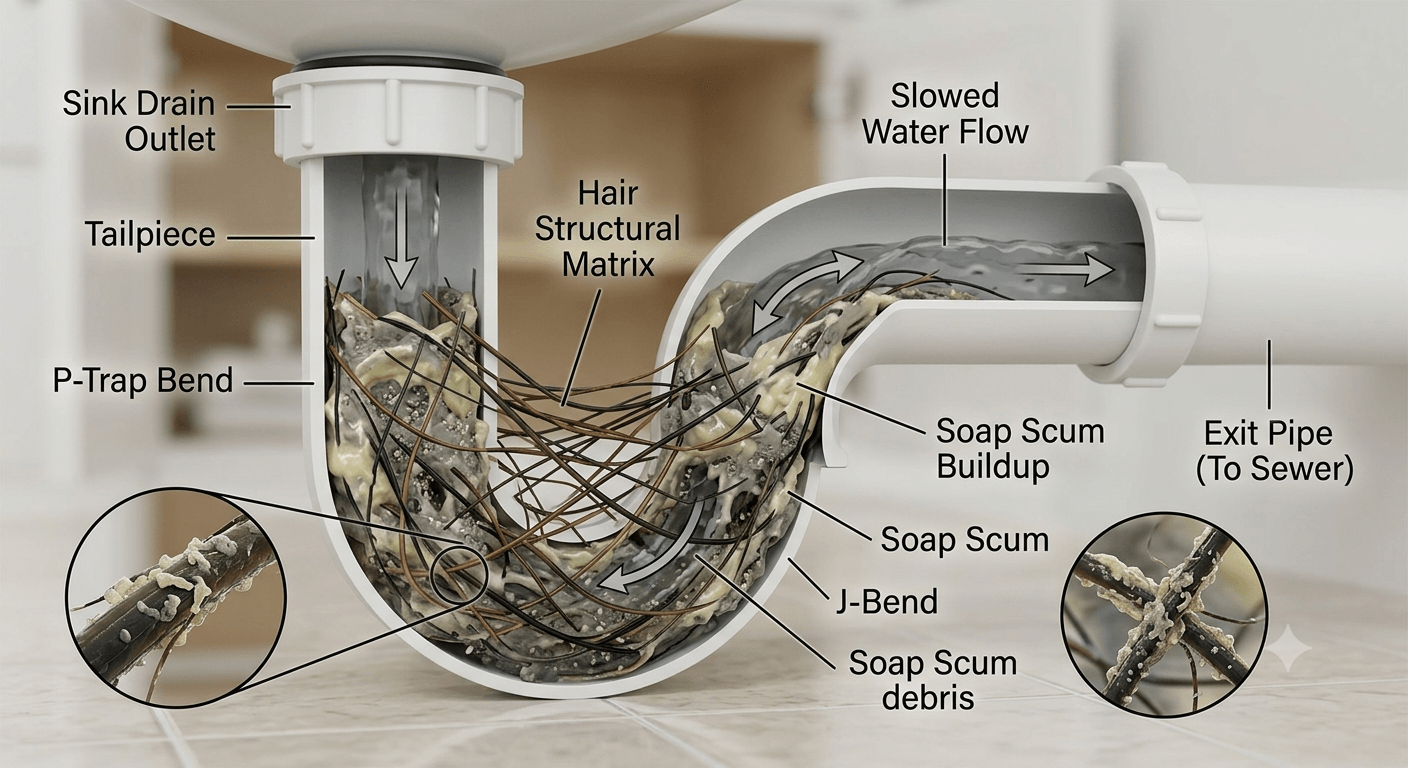
3D cross-section of a P-trap showing how hair fibers act as a structural matrix for soap scum buildup.
To maximize efficiency and minimize infrastructure risk, follow these methods in sequence:
The most direct engineering solution is to remove the physical barrier where 80% of clogs originate: the stopper. Most modern tubs use one of four mechanisms: lift-and-turn, pop-up, toe-touch, or trip-lever.
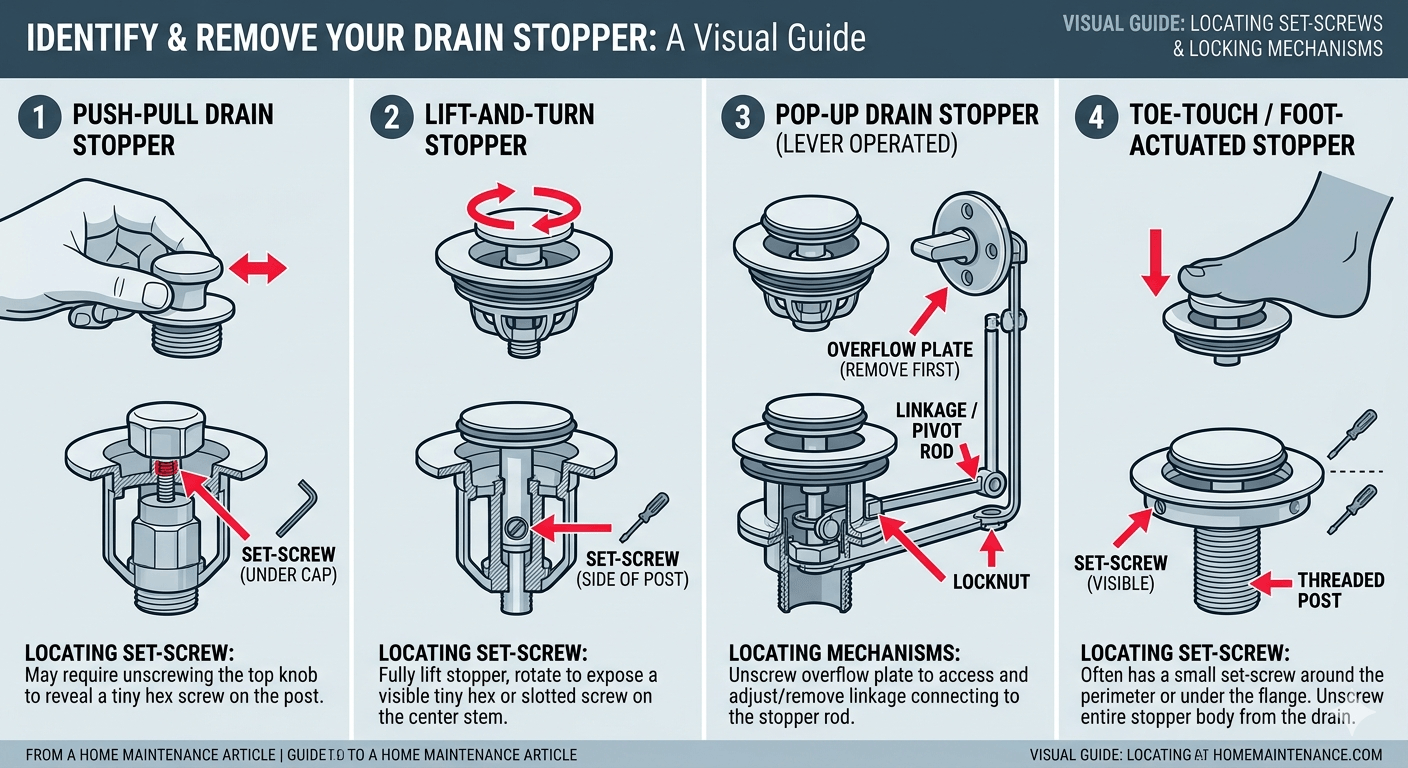
A guide to locating the set-screws and locking mechanisms on the four most common drain types.
Once the stopper is removed, use needle-nose pliers or a plastic "zip-it" tool to reach into the drain. Extract the "primary mass" slowly; if the mass breaks, it may migrate deeper into the P-trap, turning a simple fix into a complex one.
Plunging often fails because homeowners ignore the system's atmospheric vent: the overflow drain. If you leave the overflow open, it's like trying to build pressure in a balloon with a hole in the side—the kinetic energy simply escapes through the vent.
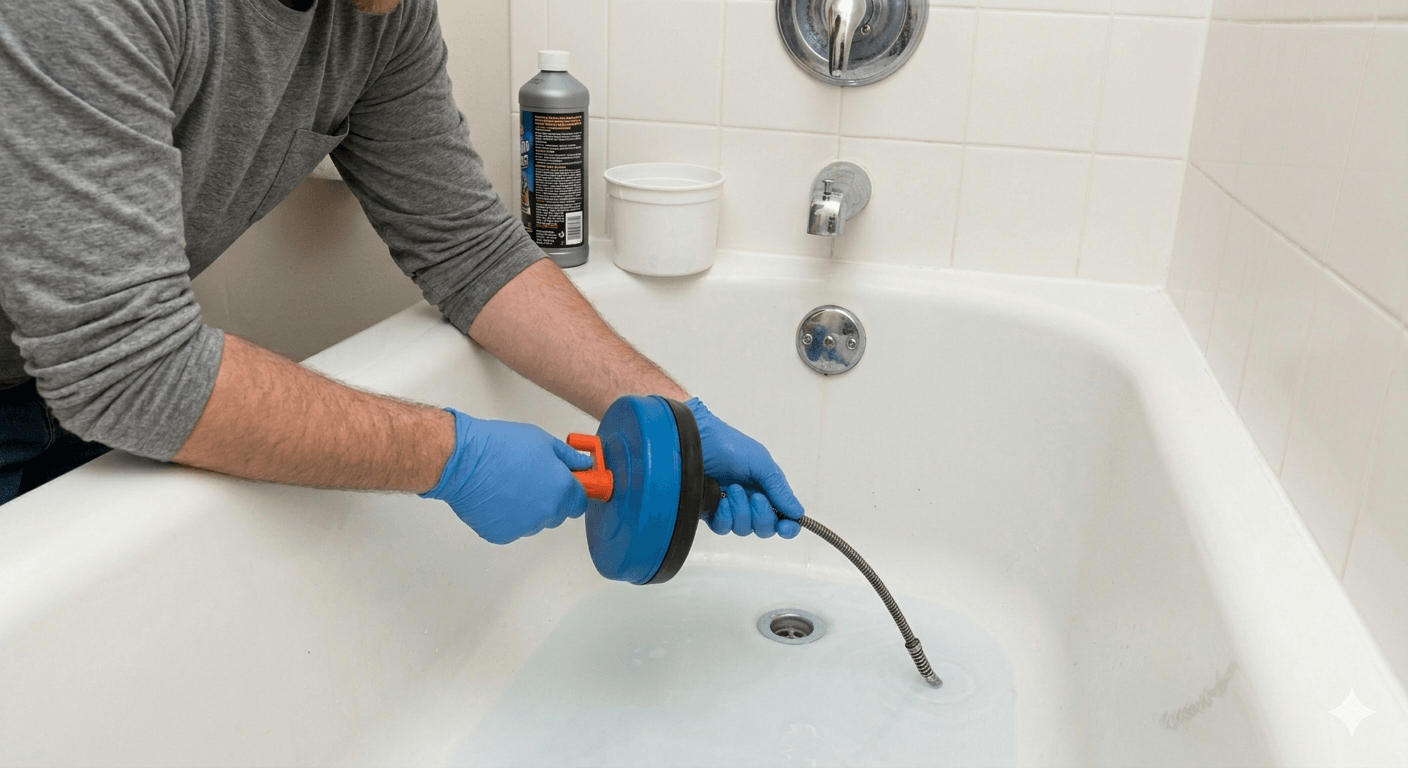
To generate the pressure needed to dislodge a solid mass [8], you must seal the overflow with a damp rag or duct tape. Use a flat-bottomed cup plunger to create a hermetic seal against the tub floor. Use rapid, rhythmic strokes to create a pressure wave that breaks the structural integrity of the clog.
A high-velocity wet/dry vacuum (Shop-Vac) is often more effective than a plunger because it removes the debris from the system rather than pushing it further down. Ensure the vacuum is in "wet" mode with the filter removed. Seal the drain around the vacuum hose and block the overflow [8]. Run the vacuum for 60 to 90 seconds [7].
For non-total blockages, use a controlled chemical reaction to dissolve the "glue" (soap scum) holding the hair together.
| Ingredient | Specification | Engineering Purpose |
|---|---|---|
| Baking Soda | 1 cup (250g) [1] | Alkaline abrasive |
| Baking Soda | 1 cup (250g) [1] | Alkaline abrasive |
| Baking Soda | 1 cup (250g) [1] | Alkaline abrasive |
| White Vinegar | 1 cup, heated to 104-113°F [2] | Acidic catalyst for CO2 production |
| Flush Water | 5-10 liters (Hot, not boiling) [3] | Thermal dissolution of fats |
The Protocol: Pour the soda, followed by the warm vinegar. Let it sit for 15-30 minutes [4]. Warning: If your home uses PVC pipes, ensure that the flushing water temperature does not exceed 60°C (140°F), as boiling water can compromise the structural integrity of the plastic connections [5].
When the obstruction is deeper than the P-trap, you need a drum auger (snake). For bathtubs, the most efficient entry point is the overflow drain. This provides a straighter path to the P-trap than the sharp 90-degree turn of the main drain.
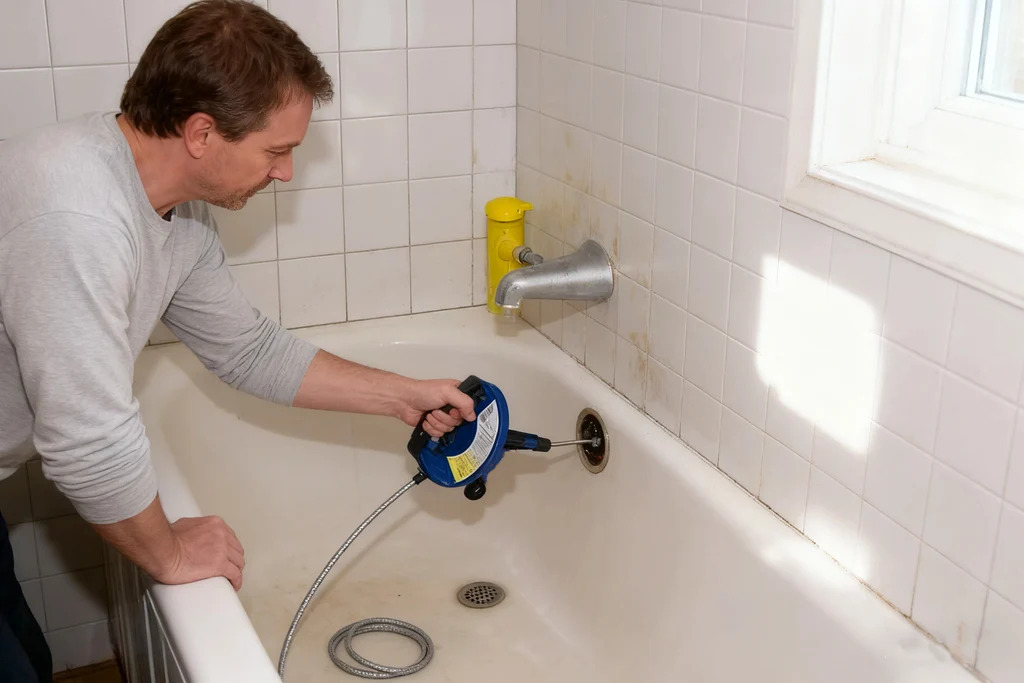
A technician demonstrating the "Direct Path" method by bypassing the main drain assembly.
Feed the cable into the overflow. Keep only 4-6 inches of cable between the tool and the pipe opening to prevent kinking [6]. If you feel a "bite," rotate the handle to engage the hair mass, then retract slowly.
| Method | Time Investment | Complexity | Infrastructure Risk | Success Rate |
|---|---|---|---|---|
| Manual Extraction | 10 min | Low | Zero | 85% (Hair clogs) |
| Plunger | 5 min | Low | Low | 60% |
| Wet/Dry Vac | 10 min | Medium | Low | 90% |
| Soda & Vinegar | 30 min | Low | Zero | 40% (Maintenance) |
| Snake/Auger | 30 min | Medium | Moderate | 90% |
DIY efforts must stop when the risk of a secondary failure emerges. If you see water seeping from the base of your toilet or through the ceiling of the floor below, you have a structural breach.
Furthermore, if you have already poured chemical cleaners down the drain and they failed, do not attempt to snake the drain. The mechanical action can splash those caustic chemicals back onto your skin or into your eyes. At this stage, professional intervention is the only safe path.
In the South Florida market, a standard professional drain clearing typically ranges from $175 to $450 [10]. If the issue is systemic, advanced solutions like hydro-jetting (high-pressure water scouring) may cost between $800 and $900, while main line repairs involving video diagnostics can exceed $2,500 [11].
At H2Osolutions, we prioritize integrity. We provide a clear warranty on our work—typically 14 to 30 days for standard clearings—ensuring that we don't just fix the symptom, but stabilize the system [12].
The most cost-effective engineering strategy is "Source Control." Installing a high-quality hair catcher is a filter at the gate—it prevents over 90% of debris from ever entering your P-trap [13].
For households with long hair or pets, we recommend a "Monthly System Flush" using the baking soda and vinegar protocol to prevent soap scum from calcifying [14]. This 5-minute habit acts as insurance against multi-thousand-dollar infrastructure repairs.
A clogged drain is a solvable engineering problem, but your pipes have a memory for mistreatment. If these methods don't yield a clear flow within 20 minutes, the issue is likely deeper in your home's infrastructure. Don't risk a structural leak by forcing a system that is signaling for professional help. We are here to ensure your South Florida home remains a sanctuary, not a construction site. Stay safe, and protect your system.
[1] Baking Soda Dosage Standards.
[2] Vinegar Reaction Temperature & Volume.
[3] Post-Reaction Flushing Protocols.
[4] Reaction Kinetics for Clog Dissolution.
[5] PVC Temperature Limits (Delta Faucet/PMI).
[6] Snake Feeding Techniques.
[7] Wet/Dry Vac Operational Timelines.
[8] Technical Regulations for Pressure Maintenance.
[9] CCTV Inspection Criteria for Sewer Laterals.
[10] Angi/HomeAdvisor 2025 Average Service Costs.
[11] Hydro-jetting and Main Line Pricing 2025.
[12] Plumbing Service Warranty Standards.
[13] Hair Catcher Efficiency Study.
[14] Maintenance Frequency Guidelines.
.png) Share
Share