H2Osolutions FL I Plumbing Services | Best Miami Plumber
 +1 (786) 627-94-72
H2Osolutions FL I Plumbing Services | Best Miami Plumber
+1 (786) 627-94-72
 29.04.2026
 7 min.
 Share
Share


Before authorizing a full replacement, we must distinguish between a localized symptom and a terminal system failure. Our practice utilizes "The Big Four" indicators to determine if a material's service life has concluded.
1. Advanced Corrosion: Look for "pitting"—microscopic indentations—or greenish oxidation (patina) on copper joints. Flaking on galvanized steel suggests the structural integrity is already compromised.
2. Hydraulic Pressure Loss: A persistent drop in PSI (Pounds per Square Inch — a measure of water pressure) often points to internal "scaling"—mineral buildup that narrows the pipe's diameter like a clogged artery.
3. Oxidation Discharge: If the first draw of water in the morning is rust-colored, your galvanized steel pipes are oxidizing from the inside out.
4. The 90-Gallon Threshold: Approximately 10% of U.S. homes lose 90 gallons or more per day to leaks [1]. If you have repaired three leaks in twelve months, you aren't "fixing" the problem; you are chasing a ghost.
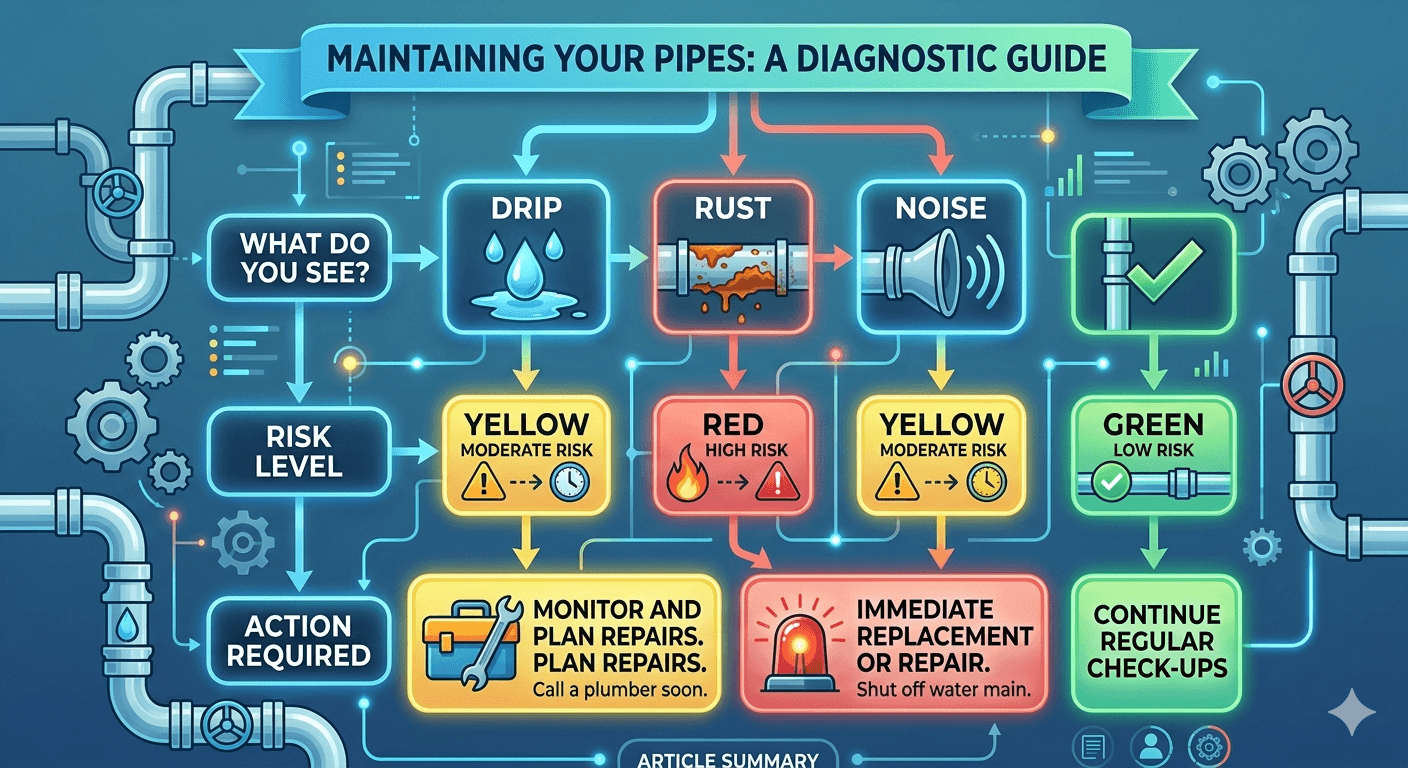
Figure 1: Engineering Decision Tree for Residential Pipe Assessment.
If your property was built before 1975, it likely utilizes cast iron for waste and galvanized steel for supply. In Florida, our mineral-heavy water accelerates internal scaling. A 1-inch galvanized pipe can be restricted to the diameter of a pencil over 30 years [21].
Furthermore, older systems frequently used lead-based solder. Modern standards require less than 0.25% lead on all wetted surfaces [22]. If you still have original steel lines, you may be dealing with a water quality issue rather than just low pressure.
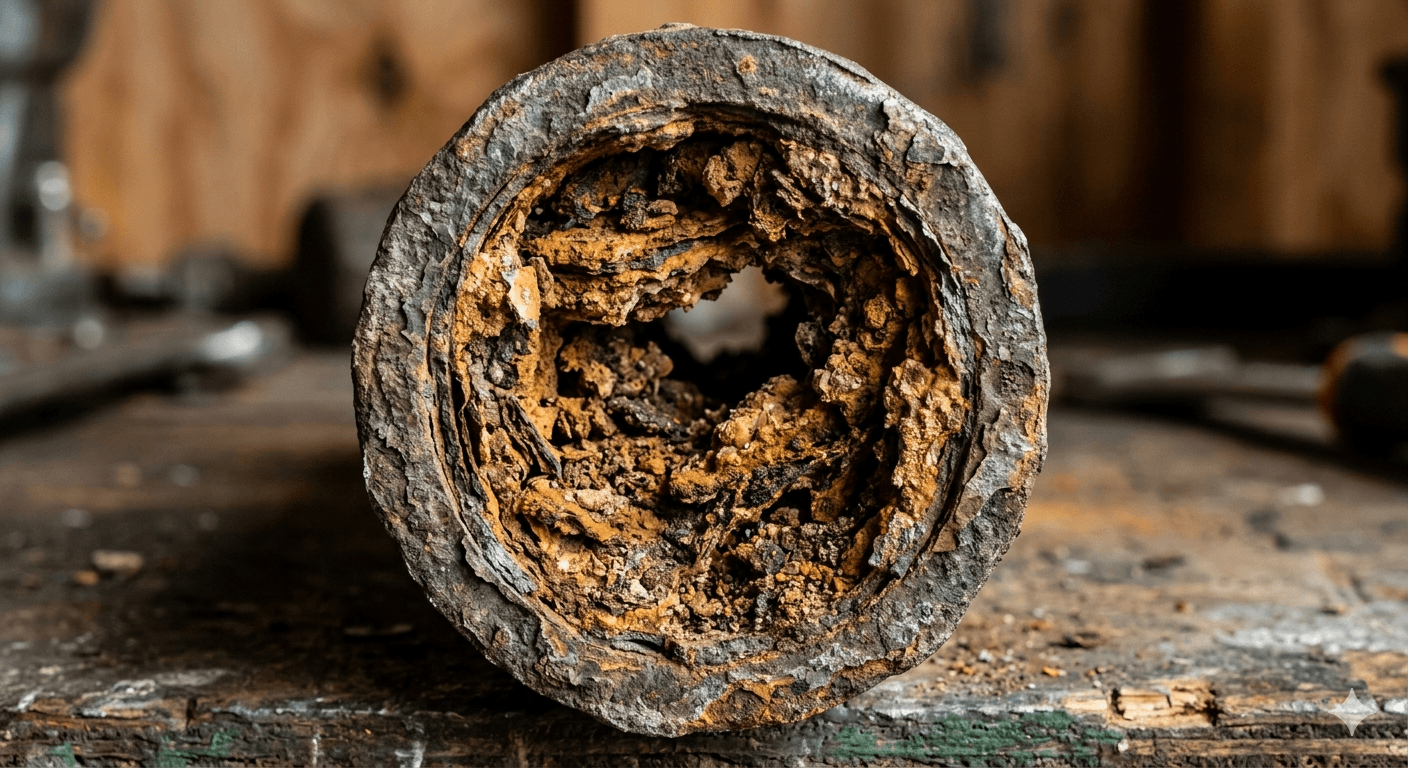
Internal oxidation: The root cause of low water pressure in legacy homes.
Most contractors sell what they are comfortable installing. We prefer to look at the engineering data.
| Material | Cost per Linear Foot | Design Life | Temp Limit | Engineering Verdict |
|---|---|---|---|---|
| PEX | $0.50-$0.70 [2] | 40-50 years [3] | 180°F (82°C) [4] | Best for Modernization |
| Copper | $2.00-$5.00+ [5] | 50-100+ years [6] | 482°F (250°C) [7] | The Gold Standard |
| PVC | $0.20-$2.00 [8] | 50-75 years [9] | 140°F (60°C) [10] | Drainage Only |
| CPVC | $0.50-$1.14 [12] | 50-75 years [13] | 200°F (93°C) [14] | Budget Drinking Water |
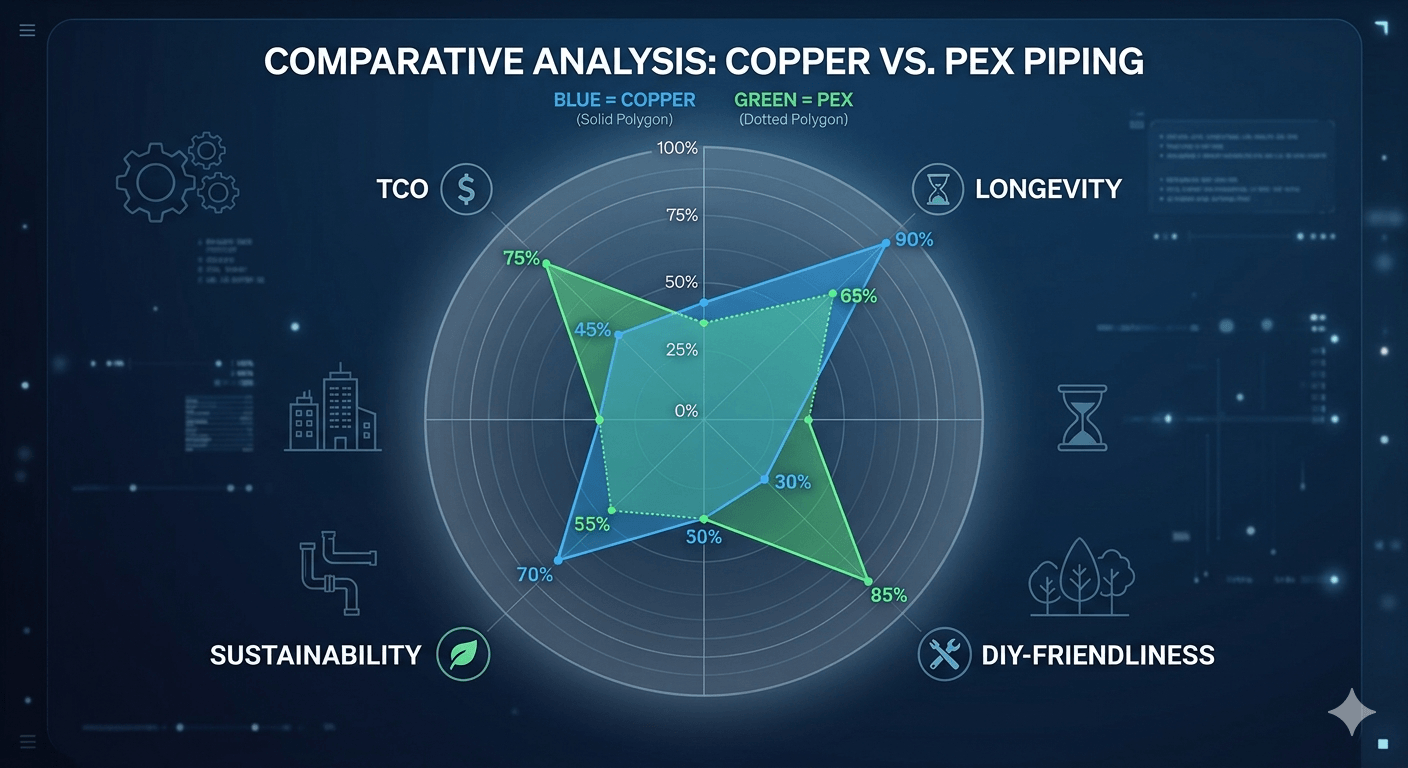
Figure 2: Total Cost of Ownership (TCO) Comparison: Copper vs. Synthetic Polymers.
PEX is a flexible polymer that undergoes "cross-linking"—a chemical process creating stronger molecular bonds. This allows the pipe to handle higher pressures than standard plastic.
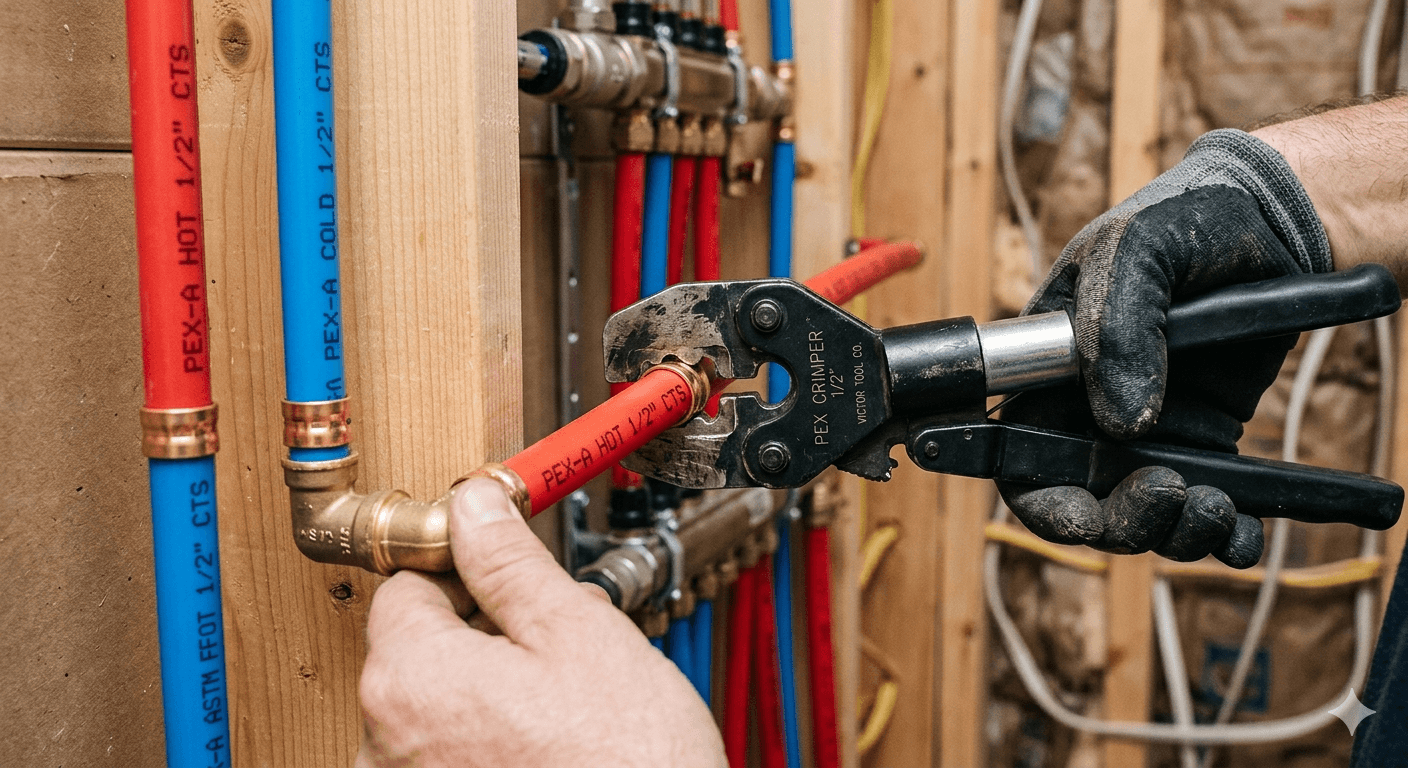
Professional PEX installation: Mechanical crimp rings and thermal color-coding.
If the objective is property ownership exceeding 20 years, copper is almost always the superior choice. It is biostatic—meaning it naturally inhibits the growth of bacteria—and is 100% recyclable.
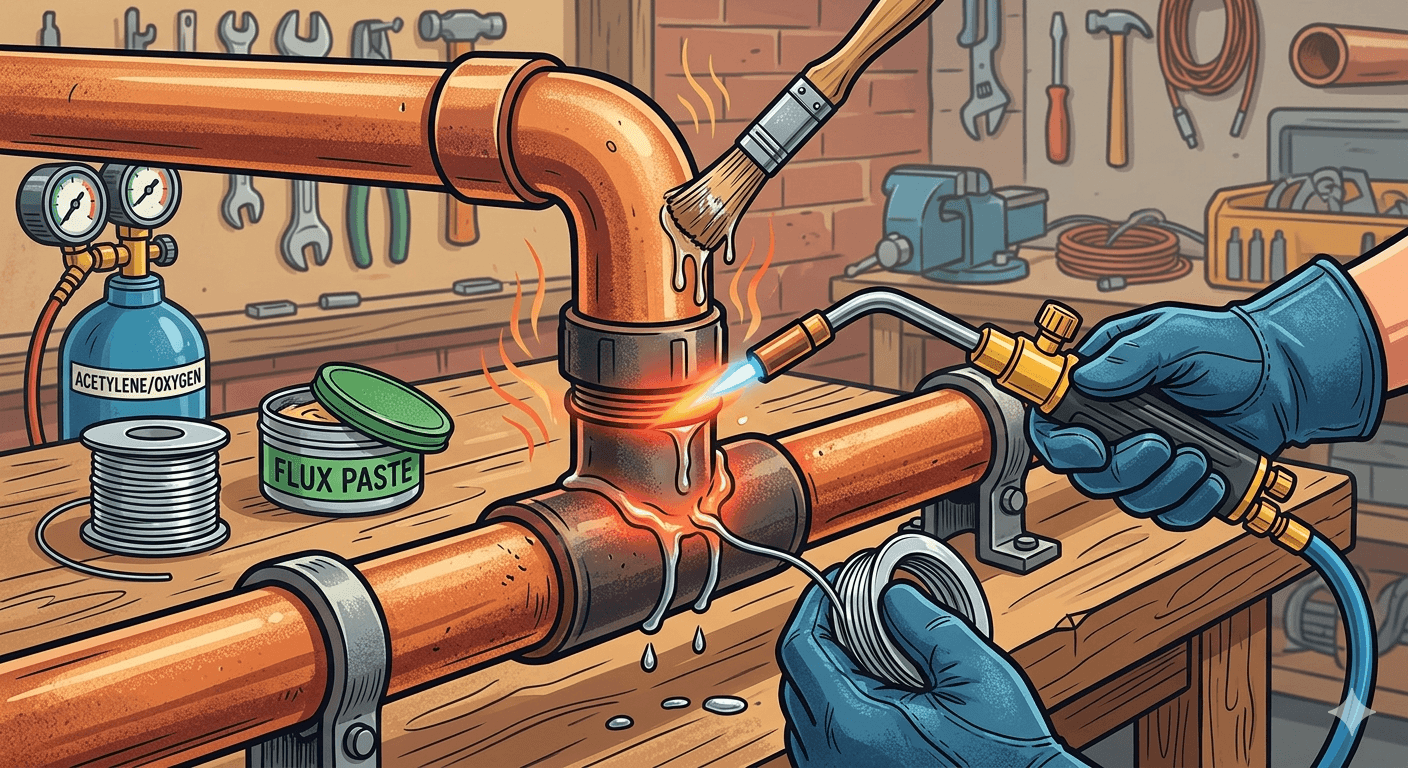
Soldering (Sweating) Copper: A high-skill connection method that ensures a permanent, metallic bond.
Polyvinyl Chloride (PVC) is excellent for moving waste, but it has a critical failure point: heat.
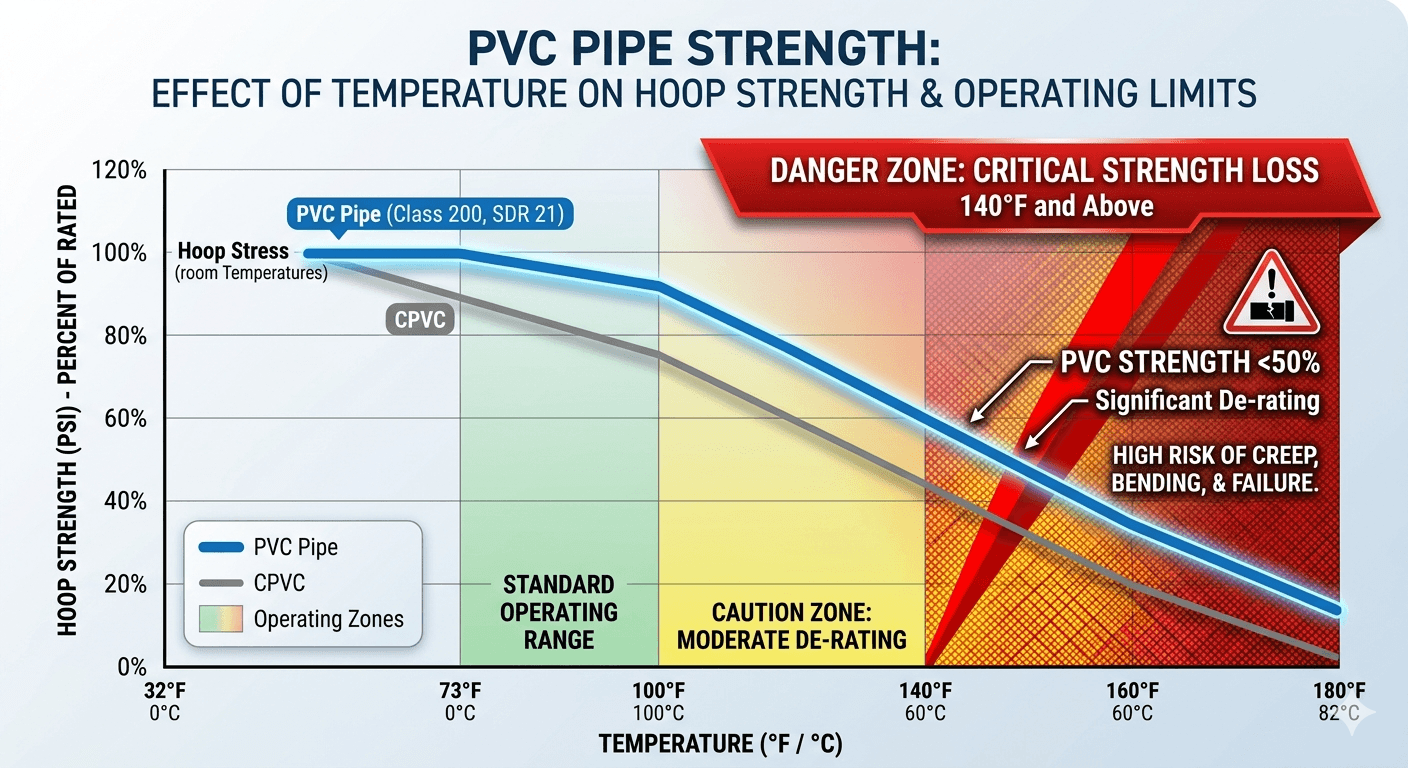
Figure 3: Thermal De-rating: Why PVC is prohibited for hot water supply.
We don't look at "price per foot." We calculate the Total Cost of Ownership (TCO), which includes maintenance and replacement cycles.
| Factor | PEX | Copper | CPVC |
|---|---|---|---|
| Initial Investment | Low | High | Medium |
| Maintenance (20 yrs) | 2% [17] | ~0% [18] | Moderate [13] |
| 75-Year TCO | $37,729 [19] | $4,644 [19] | $22,000+ [20] |
*Note: Copper's TCO is lower over 75 years because it typically requires zero replacements, whereas PEX often requires two full replacement cycles in that same timeframe.*
Plumbing failures are the leading cause of non-weather-related insurance claims.
Verify these four technical specifications with your contractor to ensure code compliance:
1. Standards Verification: PEX must meet ASTM F876; Copper must meet ASTM B88.
2. NSF-61 Certification: This ensures the material is safe for potable (drinking) water.
3. Load Mapping: Ensure the pipe diameter can handle the GPM (Gallons Per Minute — flow rate) demand of your sinks, toilets, and showers.
4. Hydrostatic Pressure Test: Never close a wall until the system has held 1.5x the working pressure for at least 2 hours [24].
At H2Osolutions, we don't just "swap pipes." We use thermal imaging and acoustic sensors to verify the integrity of your entire system. If you are unsure whether you need a patch or a full system modernization, we invite you to look at the data with our engineers.
A Final Thought for the Discerning Homeowner:
Your home is likely your most significant investment. In South Florida, where humidity and water chemistry act as constant catalysts for decay, "good enough" is a dangerous standard. Choosing the right material isn't just about stopping a drip; it's about engineering peace of mind for the next thirty years. Are you building for the next inspection, or are you building a legacy that will stand as firm as a Type L copper line? The choice you make inside your walls today defines the value of your property tomorrow.
[1] EPA WaterSense: Household Leak Statistics;
[2] Retail Pricing 2024;
[3] Plastic Pipe Institute: PEX Longevity;
[4] Technical Specs: PEX Temp;
[5] Retail Tracking: Copper Costs;
[6] Copper Development Association: LCA;
[7] Copper Thermal Properties;
[8] PVC Pricing;
[9] Uni-Bell PVC Association;
[10] PVC De-rating;
[11] PVC Softening;
[12] CPVC Pricing;
[13] Field Reports: CPVC Brittleness;
[14] Lubrizol: FlowGuard Specs;
[15] International Plumbing Code: PEX;
[16] Municipal Water Systems 2024;
[17] Industry Survey: PEX Failure;
[18] Copper Development Association: Corrosion;
[19] 75-Year TCO Study;
[20] 20-Year TCO Comparison;
[21] Hard Water Impact Analysis;
[22] Safe Drinking Water Act Standards;
[23] Uniform Plumbing Code: Pressure;
[24] IPC: Testing Requirements.
.png) Share
Share